Garage door cable repair is one of those jobs that looks simpler than it is. The two lift cables run from the bottom corners of the door up to the drums on the spring bar, or through pulleys on doors with extension springs. They're what connects the door to the springs, so they carry the springs' full pull every time the door moves. When one frays, snaps or comes off its drum, the door is being lifted from one side only and quickly twists out of square.
That's also why a cable problem rarely travels alone. A cable usually fails because of something else: a broken spring, a door that hit an obstruction on the way down, rust at the bottom corners, or a drum that slipped on its bar. We find that cause as well as replacing the cable, so you aren't calling us back for the same problem six months later.
What to look for
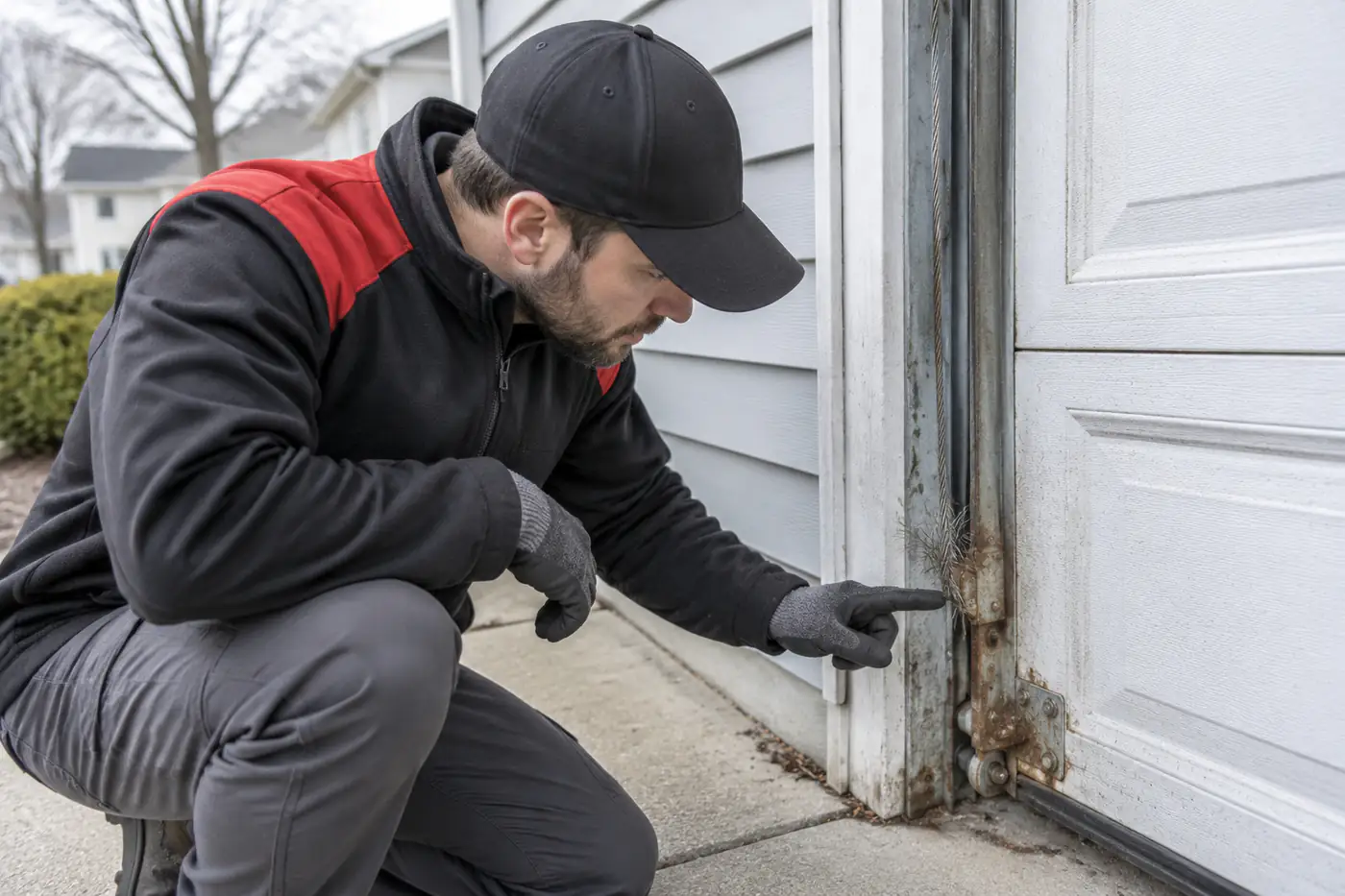
Frayed strands at the bottom
Look where the cable meets the bottom bracket. Broken strands and rust there mean the cable is wearing through.
Door crooked or uneven
One side higher than the other, or a wedge-shaped gap under the door, often means one cable has slipped or stretched.
A cable hanging loose
A slack cable dangling beside the track, or wrapped loosely off the drum, usually after a spring break or a hard stop.
Door jams partway or won't lift
The opener strains and stops because one side of the door is no longer being lifted.
A recent spring break
A spring that lets go often knocks its cable off the drum or kinks it, so the two get checked together.

How lift cables and drums work
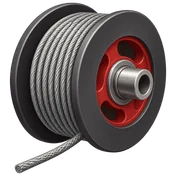
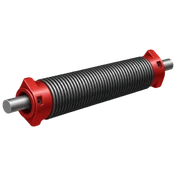
On a torsion spring door, each cable is fastened to a bottom bracket at the lower corner of the door, runs up beside the vertical track, and wraps into the grooves of a drum at the end of the spring bar. When the springs unwind, they turn the bar, the drums wind in the cable, and the door lifts evenly from both sides. Both cables have to be the same length and carry equal tension, or the door rises unevenly.
On an extension spring door, the cable runs from the bottom bracket up through a set of pulleys connected to the spring on that side. The spring stretches as the door closes and pulls the cable as it opens. Either way, the cable is under load every moment the springs hold tension, with the door open or closed.
Why does a garage door cable come off the drum?
A cable stays in its drum grooves only while it's tight. Anything that lets it go slack can let it jump: a spring breaking, the door landing on a bin or a toy while the opener keeps driving it down, or a door that binds in the track on the way down. Drums also slip when their set screws loosen, and an old drum with worn grooves can't keep the cable in line.
Rust is the other big cause around here. The bottom brackets sit right where road salt, puddles and snowmelt collect, and near the bays salt air works on the cable strands too. A rusted cable usually frays at the bottom bracket first, often on just one side, until it lets go. If you can see broken strands, the cable is already weakened and shouldn't be trusted.
Can you fix a garage door cable yourself?
We don't recommend it. Putting a cable back on the drum or replacing it means taking the tension off the springs first, and on a torsion door that means unwinding the springs with winding bars. The bottom brackets carry the same load, and loosening one on a tensioned door can release that force all at once. Here's what's safe to do while you wait.
- Stop using the opener. Running it with a loose cable can wrap the cable around the bar or pull the door further out of the track.
- Leave the door where it is, keep people and cars clear, and don't pull the release cord if the door is open.
- If the door is hanging crooked, don't try to push it level. Our off-track repair page explains why.
- Call (732) 555-0142 and tell us which side failed and whether you heard a bang, which helps us plan the visit.
What garage door cable repair involves
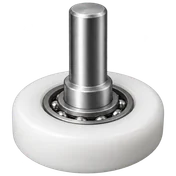
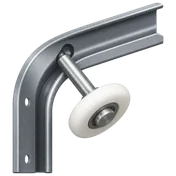
Garage door cable replacement always covers both sides. We clamp the door in place, take the tension off the springs, and replace both cables, even if only one failed. They've worn equally, and a new cable on one side next to a stretched one on the other makes the door lift unevenly. We check the drums for worn grooves and loose set screws, inspect the bottom brackets for rust and cracks, and look at the rollers and track on the side that failed, since a cable failure often bends something.
Then we wind the springs back to the right tension, set both cables evenly so the door sits level on the floor, and test the balance and the opener. If the springs are near the end of their life, we'll note it on the written price, since replacing them while the tension is already off saves a second visit. See spring repair and roller replacement for those parts, or our garage door won't open guide if you're still working out what's wrong.
How the visit works
Inspect both sides
We check both cables, the drums, the bottom brackets, the rollers and the springs to find out why the cable failed.
Written price
You get a written price for the cables and anything else we find, and nothing starts until you approve it.
Release tension and replace
With the door clamped, the springs are unwound, both cables replaced, and the drums reset and tightened.
Level, balance and test
Cables are set evenly, springs rewound, the door balanced, and the opener run through an auto-reverse test.
Questions people ask
Can I fix a garage door cable myself?
We strongly advise against it. The cables hold back the full force of the springs, and fixing one safely means unwinding torsion springs with proper winding bars. Loosening a bottom bracket or a drum set screw on a door under tension can release that force at once.
Why does a garage door cable come off the drum?
Because it went slack. That happens when a spring breaks, when the door lands on something while the opener keeps driving it down, when the door binds in the track, or when a drum slips on the bar. A worn drum or a stretched cable makes it more likely.
How much does it cost to replace a garage door cable?
It depends on the door and on whether the springs, drums or rollers need work at the same time. We give you a written price after inspecting both sides, and the estimate is free. Typical ranges from national cost surveys are in our garage door repair cost guide.
Should both cables be replaced at the same time?
Yes, we replace them in pairs. Both cables have done the same work and worn the same way, and a new cable next to a stretched one makes the door lift crooked.
Is it safe to use my garage door with a frayed cable?
No, a frayed cable can snap without warning, and the door can drop on that side or jam crooked. Stop using the opener, leave the door closed if you can, and have it looked at soon.
Why is my garage door crooked when it opens?
Usually one cable has slipped on its drum, stretched, or come off entirely, so one side lifts before the other. A drum that has slipped on the bar does the same thing. Stop using the door until it's fixed, since a crooked door can come off its track.