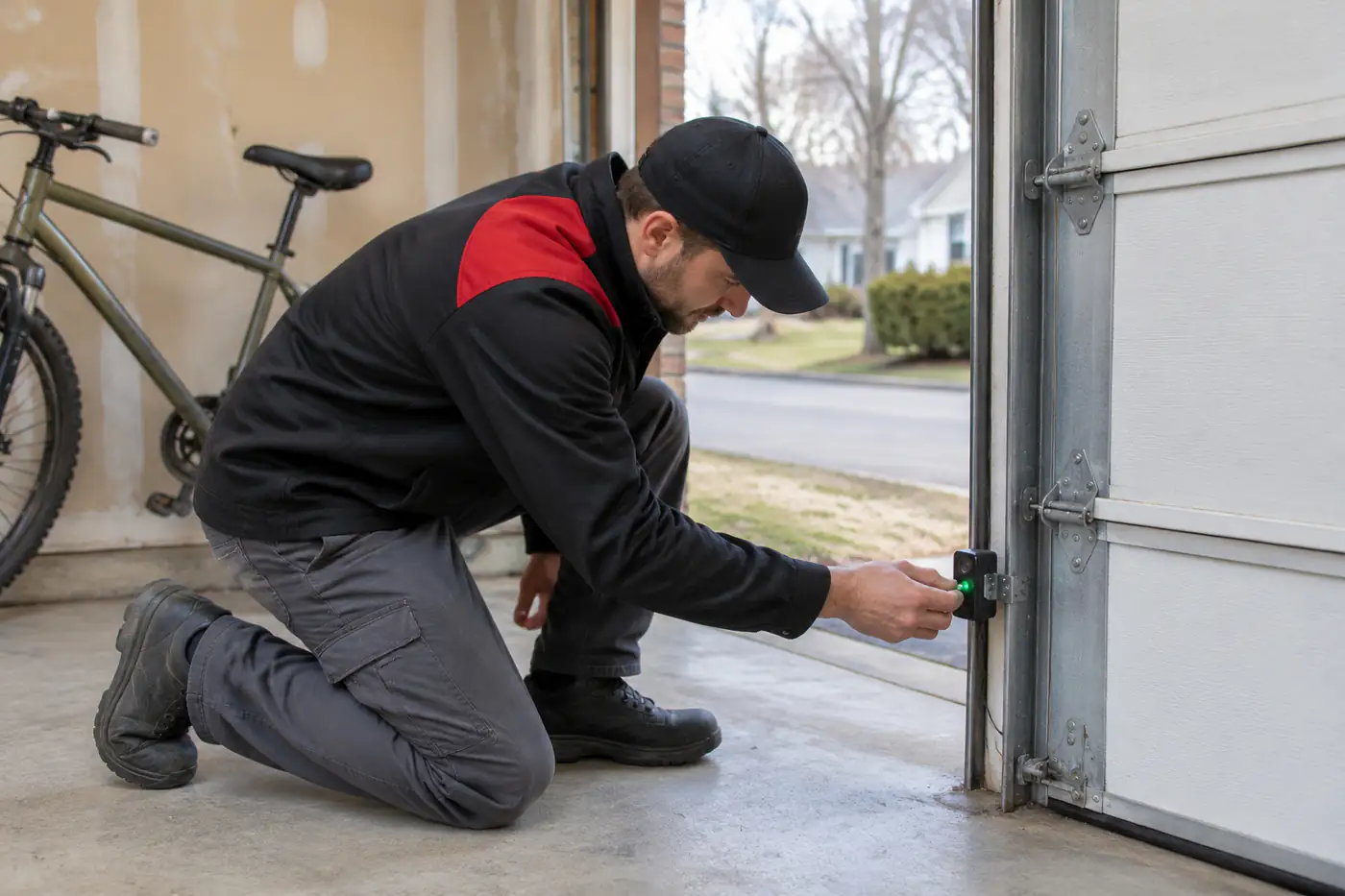
Garage door sensor repair is a common opener call, and often a simple fix once you know where to look. The two small sensors near the floor on either side of the door, usually called photo eyes, are the reason your door won't come down on a child, a dog or the back of your car.
When the eyes can't see each other, the opener refuses to close the door or reverses partway down. That's frustrating at 7 AM with the car running, but it's the system doing its job. The work is figuring out whether the eyes are knocked out of line, blinded by the sun, losing power through a damaged wire, or failing inside. We test each of those, fix the cause, and show you the safety system working before we pack up.
What to look for
Door goes down, then right back up
A door that reverses on its own before reaching the floor usually means the beam was interrupted or flickered.
Opener light flashes when you press the button
LiftMaster and Chamberlain openers flash their lights about 10 times when the sensors block a close.
Trouble only at certain times of day
If the door fails on sunny mornings or late afternoons, low sun hitting the receiving eye is the likely cause.
Sensor light off or flickering
A dark or blinking indicator on one eye points to misalignment, a dirty lens or a damaged wire.
Bent brackets or loose eyes
Bikes, trash cans and car bumpers knock sensor brackets out of line all the time.
Door only closes if you hold the wall button
That's the opener's override for failed sensors. It works in a pinch, but the eyes need attention.



How garage door sensors work, and why every opener has them
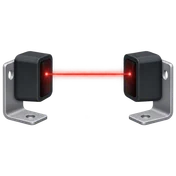
One eye sends an invisible infrared beam across the door opening, and the other receives it. As long as the beam arrives, the opener will close the door. If something breaks the beam while the door is coming down, the opener stops and reverses. Because the eyes watch the opening instead of waiting for contact, they protect people and pets before the door ever touches them.
That protection isn't optional. Federal law has required residential openers made since 1991 to meet the UL 325 safety standard, which means the door must reverse when it hits an obstruction. Openers built from 1993 on also need a second layer of protection, such as photo eyes, a door edge sensor or a hold-to-close wall button, and photo eyes are what nearly every home has. Industry guidance keeps the beam no higher than six inches above the floor so a small child can't crawl under it. If your opener predates all of this and has no eyes at all, it should be replaced, not repaired; see garage door opener installation for what a current opener includes.
Why is my garage door sensor blinking?
Each eye has a small indicator light, and what it's doing tells you a lot. On LiftMaster and Chamberlain systems, the sending eye glows amber and the receiving eye glows green. On Genie, the sending eye is red and the receiving eye is green. A steady light on both means power and alignment are good. A receiving light that's off or flickering means the beam isn't arriving cleanly, usually because of misalignment, a dirty lens or something in the way. If both lights are dark, the eyes aren't getting power, which points to the wiring or the opener's sensor terminals.
The opener often adds its own signal. Many LiftMaster and Chamberlain openers flash the main light about 10 times when they refuse to close, and newer models blink a two-part code with up and down arrow lights on the motor unit. A 1-4 code points to misaligned or blocked sensors, while 1-1 and 1-2 point to cut, disconnected or shorted wires. On Genie, a sending eye that blinks red twice and pauses means alignment or an obstruction. Check the label on your motor unit or the manual for the exact chart, or read our garage door sensor problems guide.
What causes sensor problems in Ocean and Monmouth County garages
Sensor trouble comes down to a short list of causes, and the right fix depends on which one you have. We also check sensor alignment and wiring on every garage door tune-up, which catches most of these early.
- Misalignment: a bumped bracket or a loose wing nut is enough to aim the eyes past each other
- Sun glare: low sun shining straight into the receiving eye washes out the beam, mostly on east- and west-facing garages in winter; swapping the eyes so the receiver sits on the shaded side usually solves it
- Dirty or wet lenses: dust, cobwebs and condensation on humid summer mornings scatter the beam
- Damaged wiring: staples driven through the thin wire, a shovel or string trimmer nicking it, or mice chewing it over the winter
- Corrosion: salt air in shore towns eats at the wire connections and the eyes themselves
- Failed eyes: cracked housings and failed electronics, usually on older sets
Garage door sensor repair or replacement?
If the eyes power up and hold a steady light once they're cleaned and aligned, they're fine. We tighten or replace the brackets, reroute or replace damaged wire, and mount everything so a bike or bin can't knock it out of line again. Garage door sensor replacement makes sense when an eye is cracked, won't light even with good wiring, or has corroded from salt air. Replacement eyes generally have to match the opener's brand family, because each opener listens for its own signal, so we fit a set that's compatible with yours.
If the sensors are fine and the door still won't close, the cause is elsewhere: travel limits, force settings, a binding track or the opener itself. Our guide on why a garage door won't close covers those, and garage door opener repair is the next step when the motor unit is at fault.
How the visit works
Read the lights
We check both indicator lights and any opener code to narrow the problem to alignment, power or wiring.
Trace and fix the cause
Eyes get cleaned and aligned, brackets tightened, and damaged or stapled wire replaced from the eyes back to the opener.
Replace if needed
Cracked, corroded or dead eyes are replaced with a compatible set, mounted no higher than six inches off the floor.
Prove it works
We break the beam during a close, then run the auto-reverse test with a board laid flat on the floor.
Questions people ask
How do I reset the safety sensors on my garage door?
There's usually no reset button, so resetting means getting the eyes to see each other again. Clear the path, wipe both lenses, then loosen the wing nut on the eye with the flickering light and aim it until the light holds steady. If that doesn't work, unplug the opener for a minute, plug it back in, and check the wires for damage.
Why is my garage door sensor blinking?
A blinking or dark light on the receiving eye means the beam isn't arriving cleanly. The usual causes are misalignment, a dirty lens, direct sun or a damaged wire. If the opener's main light is flashing instead, the opener is telling you it won't close because of the sensors.
Can I bypass garage door sensors?
You shouldn't disable them, because they're the device that keeps the door from closing on a person or pet, and federal rules have required that protection on openers since 1993. To get the door shut while you wait for a repair, most openers will close if you press and hold the wall button until the door reaches the floor. Watch the door the whole way down.
Do garage door sensors have to match the opener brand?
In most cases they do. Each opener family uses its own sensor signal, so eyes from one brand usually won't work on another. We match replacement sensors to your opener so the safety system works the way it was designed to.
Why does my garage door only fail on sunny days?
Low sun can shine straight into the receiving eye and drown out the infrared beam. It's most common on garages that face east or west in winter, when the sun sits low. Swapping the eyes so the receiver is on the shaded side, or adding a sun shield, usually fixes it.
My door won't close from the remote but closes if I hold the wall button. Is that the sensors?
That pattern almost always points to the sensors. Holding the wall button overrides failed sensors on most openers, while remotes and keypads can't. If the remote does nothing at all, even with the door open, see remote and keypad repair.