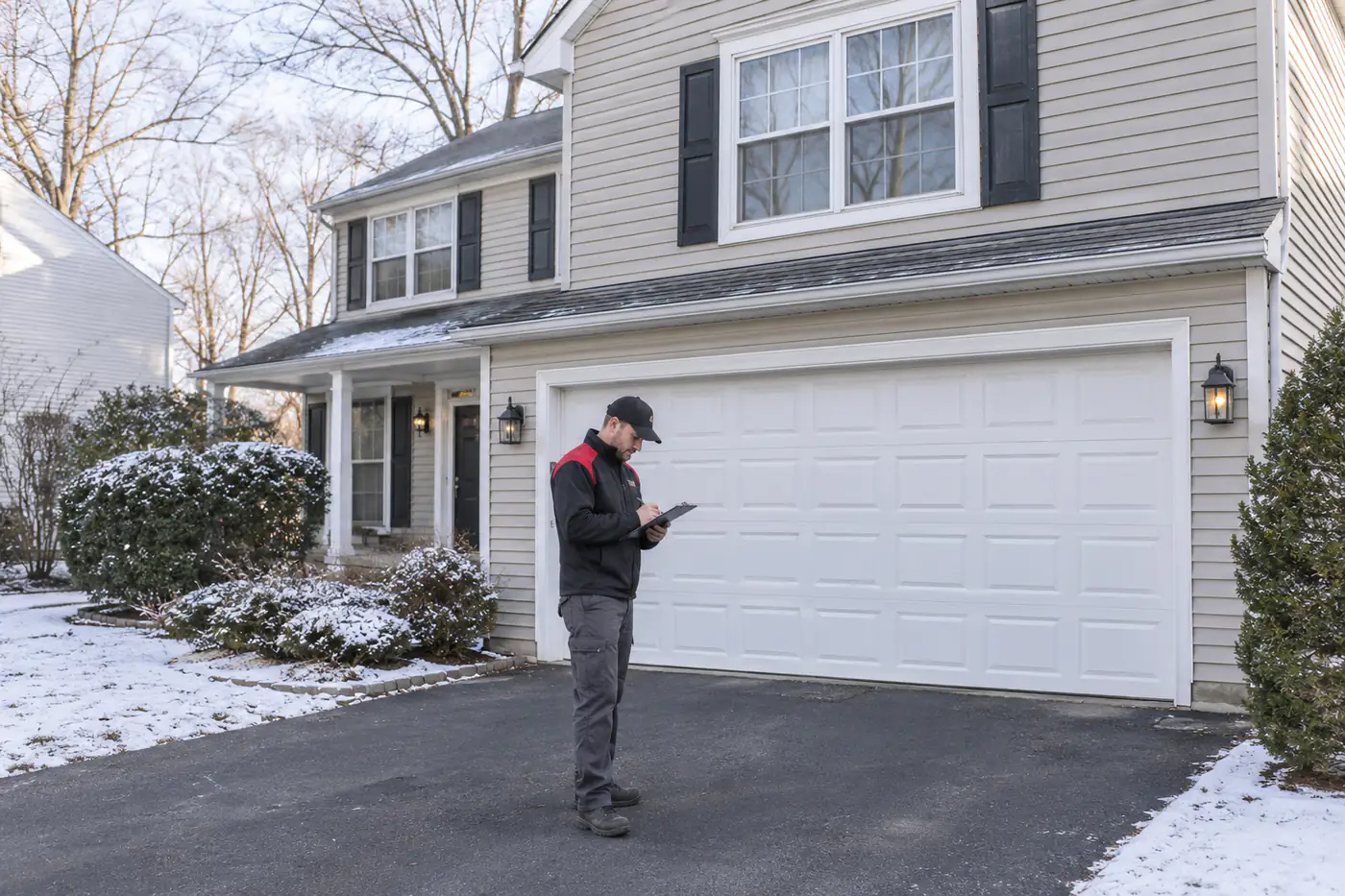
An insulated garage door makes the most sense when the garage is part of the house, and in Ocean and Monmouth counties it usually is. Many colonials, split-levels and newer homes around Jackson, Howell and Manalapan have an attached garage, often with a bedroom or bonus room above it and a laundry room or mudroom behind it. In January, a single-layer steel door can leave that garage not much warmer than the driveway.
We install insulated steel doors and help homeowners pick the right one for how they use the space. The choice comes down to the type of foam, how the door is built, the style you want, and reading the ratings correctly. This page sticks to what you need to choose well. For typical price ranges, see our garage door installation cost guide.
What to look for
A room above the garage
Bedrooms and bonus rooms over the garage stay more comfortable when the space below isn't close to outdoor temperature.
Cold mudroom or laundry room
Rooms that share a wall with the garage lose heat through that wall and the door into the house.
A garage you work or train in
If you spend time in the garage, an insulated door is the difference between usable and miserable in February.
Dented or flimsy door
Insulated doors, polyurethane especially, are stiffer and stand up better to balls, bikes and bumpers.
Gusty shore wind and street noise
Foam-filled sections flex less in the wind and deaden the rattle a thin steel skin lets through.





Polystyrene or polyurethane: which insulated garage door is better?
Insulated doors use one of two foams. Polystyrene is rigid foam board cut to fit and set into each section. Polyurethane starts as a liquid that's injected between an outer and an inner steel skin, where it expands to fill every corner and sticks to both skins. That makes a polyurethane door stiffer and gives it more insulating value for the same thickness. Polystyrene costs less and is still a clear step up from an uninsulated door.
How the door is built matters as much as the foam. A single-layer door is just a steel skin. A two-layer door adds insulation with a vinyl or paper backing on the inside. A three-layer door sandwiches the foam between two steel skins, which gives you a finished inside face, better dent resistance and the most sound deadening. Manufacturers label these layers differently, so we compare doors by what's actually inside them.
| What you're comparing | Polystyrene | Polyurethane |
|---|---|---|
| How it goes in | Rigid foam panels set into each section | Liquid foam injected between two steel skins |
| Insulating value per inch | Good | Higher |
| Stiffness and dent resistance | Some improvement | Noticeably stiffer, since the foam sticks to both skins |
| Noise | Dampens rattle | Dampens the most |
| Best fit | Detached garages and parking-only attached garages | Attached garages with rooms above, workshops, shore homes |
What R-value should a garage door have in New Jersey?
There's no single required number for a typical garage door. Ocean and Monmouth counties sit in climate zone 4A, which means cold winters and humid summers. In most homes the garage isn't heated, so the door isn't part of the house's insulated shell; the wall between the garage and the house, and the ceiling under any room above, do that job. The door decides how cold the garage itself gets, and that's what you feel in the rooms around it.
Our rule of thumb: for an attached garage with living space above or beside it, or a garage you work in, choose a polyurethane door near the top of the maker's range. For an attached garage you only park in, a good polystyrene door is often enough. For a detached garage, insulation is mostly about noise and stiffness, and an uninsulated door can be fine. Insulation is wasted if the door leaks at the edges, so pair it with fresh weather stripping and bottom seals.
Why garage door R-values aren't always comparable between brands
R-value measures how well a material resists heat flow, and higher is better. The catch is what's being measured. Many brands publish a calculated R-value for a single door section, based on the foam and steel through the panel. That figure leaves out the joints between sections, the edges, any windows and the seals, which is where a lot of heat gets through an installed door. DASMA, the door industry's trade association, points out that a section R-value and a tested U-factor for the whole installed door measure different things and can't be converted into each other.
So compare like with like. If two brands both publish a tested U-factor for the installed door, compare those, and remember that lower is better. If all you have are R-values, check that both were calculated the same way, and be wary of a number that looks far ahead of everything else. Windows lower a door's performance, so compare the same design. Our garage door brands compared guide covers what else differs between makers.
Is an insulated garage door worth it?
For an attached garage in New Jersey, usually yes. You get a warmer garage in winter, a cooler one on a July afternoon when the sun hits the door, rooms beside the garage that hold their temperature better, and a door that's less noisy and harder to dent. Don't expect big heating savings from the door alone, since most garages aren't heated. The payoff is comfort, less noise and a sturdier door, and you'll notice it on the first cold morning.
Plan for a few things. Insulated doors weigh more, so the springs have to be sized to the new door, which is part of any proper garage door installation. Your existing opener can usually stay if it's healthy, because a balanced door is light to lift. Near the beach, ask about a wind-load rating and corrosion-resistant hardware. If you also want a new look, our garage door styles page covers carriage house, modern and raised-panel designs, nearly all of which come insulated, and the garage door sizes guide explains how openings are measured.
How the visit works
Look at the garage and how you use it
We measure the opening, check headroom and side room, and ask about rooms above, heating and how you use the space.
Compare doors side by side
We walk through foam types, construction, styles and window options, with each maker's published ratings and how they were measured.
Written price, no obligation
The free onsite estimate ends with a written price. Nothing is ordered until you approve it.
Install and test
We remove the old door, install the new one with springs sized to its weight, and finish with a balance check and auto-reverse test.
Questions people ask
What is the average cost of an insulated garage door?
It depends on the door's size, foam type, construction and style, so a single average isn't very useful. Polyurethane costs more than polystyrene, and three-layer doors more than two-layer ones. Our installation cost guide lists typical ranges, and we give you a written price at a free onsite estimate.
Is an insulated garage door worth it?
For an attached garage, especially one with a room above or beside it, usually yes. The garage stays warmer, nearby rooms are more comfortable, and the door is stiffer and less noisy. For a detached garage used only for parking, the benefit is smaller.
What R-value should a garage door have in New Jersey?
There's no single required number for most garages. For an attached garage with living space above or beside it, choose a polyurethane door near the top of the maker's range; for a parking-only attached garage, a good polystyrene door is often enough. Compare R-values only when brands calculate them the same way.
Can I add insulation to my existing garage door?
Foam panel kits fit into the sections of many single-layer doors, and they help some. They won't match a factory-insulated door, and the added weight can throw off the spring balance, so the springs may need adjusting afterward. If the door is old or damaged, a new insulated door is usually the better buy.
Are insulated garage doors less noisy?
They are, noticeably. The foam deadens the drumming and rattle of a thin steel skin, and three-layer polyurethane doors sound the most solid. Nylon rollers and a belt-drive opener take care of most of the remaining noise.
Does an insulated garage door help the room above the garage?
It helps by keeping the garage under the room warmer, so the floor isn't sitting over near-outdoor air. The insulation in the ceiling between the garage and the room does most of the work, so check it too if that room stays cold. Sealing the bottom and sides of the door matters as much as the foam inside it.