The short answer
If the opener light flashes and the door reverses, check the two safety sensors near the floor first.
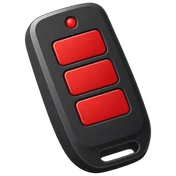
If the wall button closes the door but the remotes don't, the lock feature on the wall control may be on.
Never turn up the opener's force setting to make a door close. It defeats the safety reverse and hides the actual fault.
After any fix, test the auto-reverse with a 2x4 laid flat on the floor under the door.


Why does my garage door go back up when I try to close it?
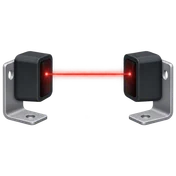
Your opener is designed to refuse to close when it isn't sure the path is clear. Federal rules for residential openers, built on the UL 325 safety standard, require openers made since 1993 to reverse when the door hits something and to have a second layer of protection, usually a pair of photo-eye sensors. Under 16 CFR 1211, the opener must start reversing within two seconds of contact with an obstruction.
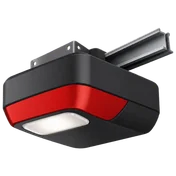
So when the door starts down and pops back up, the opener thinks something is in the way. LiftMaster says that when its openers have a sensor problem, the main lights flash 10 times. The other common causes are a door that's hitting actual resistance, travel limits that no longer match the door, or a wall control set to lock out the remotes.
Safe checks you can do in ten minutes
Work through these in order. None of them involves the springs or cables.
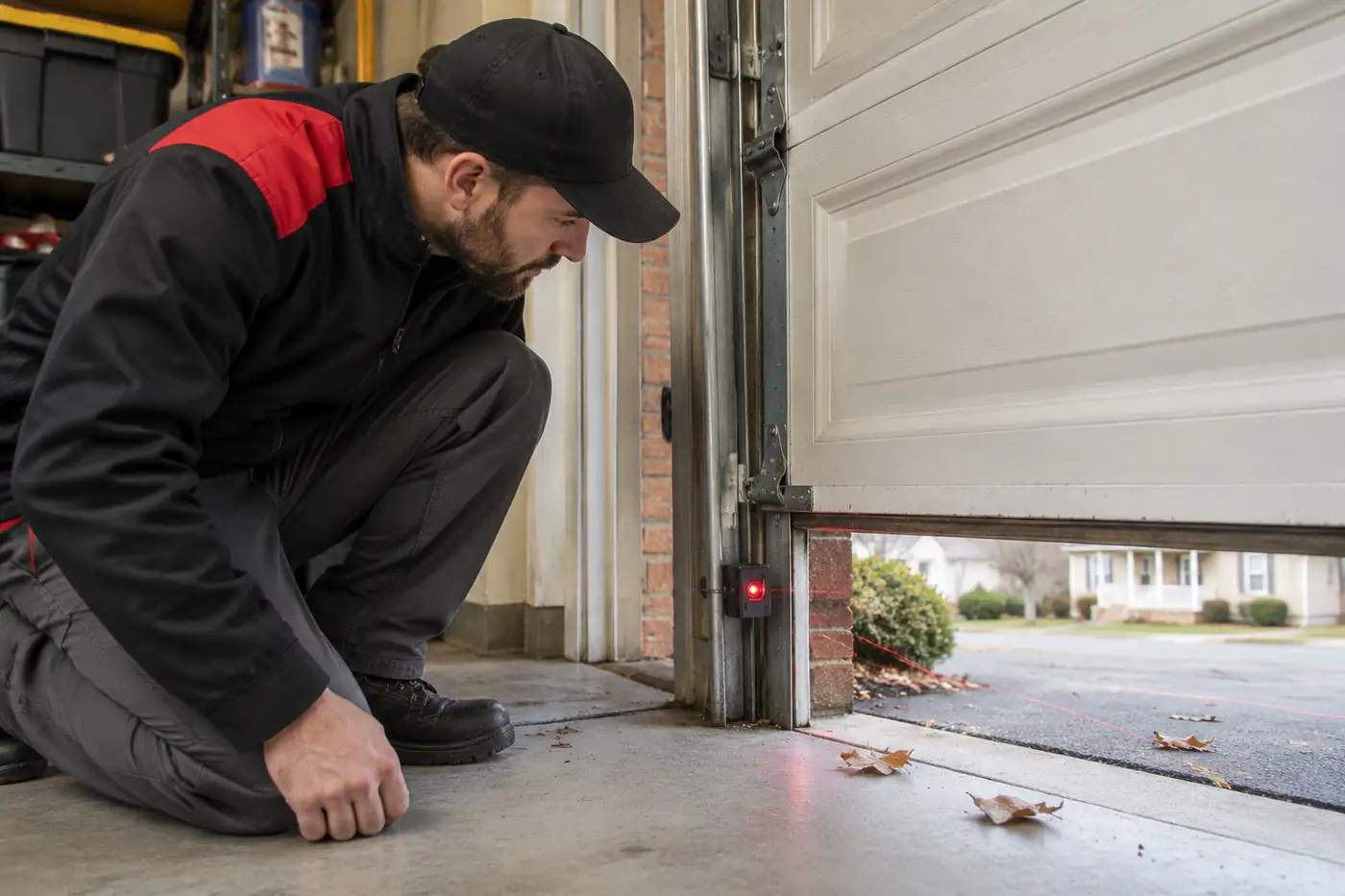
- Look along the floor: Leaves, a broom handle, a recycling bin or a mound of snow in the door's path will trip the sensors or stop the door.
- Read the sensor lights: On LiftMaster and Chamberlain sensors, the sending eye has an amber light and the receiving eye a green one. Both should glow steady. A green light that's off or flickering means the beam isn't getting through. On Genie Safe-T-Beams, the red and green lights should both be on solid.
- Wipe the lenses: Dust, cobwebs and road spray on the lens can block the beam. A soft dry cloth is enough.
- Realign the sensors: Loosen the wing nut on the receiving sensor, aim it at the other one until its light holds steady, then tighten. Our garage door sensor guide walks through this step by step.
- Watch for sunlight: LiftMaster notes that sun shining into the receiving sensor can block the beam, so a door that won't close only at certain times of day points to glare.
- Check the wall control lock: On LiftMaster openers, two flashes of the opener light mean the lock is on. The wall button still works but the remotes are locked out. Press the lock button to turn it off. Genie wall consoles have a vacation lock slider that does the same thing.
- Try a fresh remote battery: If only one remote fails and the wall button works, a dead battery is the likely culprit. Our opener not working guide has more on remote and power problems.
When the door touches the floor and goes back up
If the door closes all the way, touches the floor and then reverses, the sensors aren't the problem. The opener is reading the floor as an obstruction. Genie lists incorrectly set travel limits as a cause, and Clopay points to the close limit and force settings, along with ice, water or debris at the threshold. In a New Jersey winter, a frozen bottom seal or a ridge of ice under the door is a common trigger.
Travel limits can be adjusted following your opener's manual. Force is different. DASMA, the door industry's trade group, warns that turning up the force should never be used to make up for a door that's unbalanced or doesn't move smoothly. After any adjustment, lay a 2x4 flat on the floor under the center of the door and close it. DASMA's checklist says the door should reverse when it touches the board and return to fully open. If it doesn't, stop using the opener until it's fixed.
How to close the door if the sensors won't cooperate
On many older LiftMaster and Chamberlain openers, you can close the door by pressing and holding the wall control button until the door is all the way down. LiftMaster notes that openers and replacement logic boards made after February 3, 2022 no longer have this feature. If yours does, watch the door the whole way and keep everyone clear.
You can also close the door by hand if the springs are intact, since a balanced door stays where you leave it. Chamberlain advises using the emergency release with the door closed whenever possible, because a door with weak or broken springs can fall fast. If you have to release an open door, check the springs above it for a gap first, stand to the side rather than underneath, keep a hand on the door, and lower it slowly. If it feels very heavy or starts to drop, step back and call, because that points to a broken spring. Never remove the sensors, tape them together or mount them higher to get around the problem.
When the problem is the door, not the opener
Sometimes a door reverses halfway down because it's binding. Look for a bent track, a roller that's popped out, a door that sits crooked in the opening, a slack cable, or a gap in the spring above the door. Chamberlain's troubleshooting starts with disconnecting the opener and moving the door by hand: if it's heavy, sticks or drops, the door is the problem, not the opener.
Leave springs, cables, cable drums and the bottom brackets alone. They're under high tension, and DASMA advises that only a trained technician adjust them. If you see a broken spring, our broken spring guide explains what to do next.
When to call Alpha Pro
Call when a sensor light won't come on at all, the wiring is cut or chewed, the door is crooked or off track, the opener flashes a code you can't clear, or the door won't reverse on the 2x4 test. Our sensor repair and opener repair services cover all major brands, and if the door is stuck open overnight, our emergency repair page explains how we handle urgent calls.
We're open every day from 7 AM to 10 PM and fit in same-day visits when the schedule allows. The technician finds the cause, gives you a written price before any work, and finishes with a balance check and an auto-reverse safety test. If your door won't open either, see our guide for a garage door that won't open.
Questions people ask
Why does my garage door go back up when I try to close it?
The opener thinks something is in the way. Most often the safety sensors near the floor are blocked, dirty or knocked out of alignment, and many openers flash their lights when that happens. If the door reverses only after touching the floor, the travel limit or force setting needs adjusting, or ice and debris are in the way.
How do I reset the safety sensors on my garage door?
There's no reset button on most sensors, so you restore the beam instead. Make sure nothing blocks it, clean both lenses, and adjust the receiving sensor until both indicator lights stay solid, then try the remote again. If a light won't come on at all, suspect the wiring rather than the alignment.
Will unplugging the garage door opener reset it?
Unplugging the opener for a minute and plugging it back in is a harmless power cycle that can clear a glitch, such as after a power surge. It won't fix misaligned sensors, wrong travel limits or a broken spring, so if the door still won't close afterward, work through the sensor checks.
Can I close my garage door if the sensors are broken?
On many older LiftMaster and Chamberlain openers, pressing and holding the wall button will close the door, but units made after early 2022 don't allow it. Otherwise, if the springs are working, pull the emergency release and lower the door slowly by hand, standing to the side. Get the sensors fixed soon, since they're a required safety feature.
Rather have it handled?
Our technicians handle sensor repair across Jackson, Ocean County and Monmouth County, with a written price before any work starts.
Sources
- support.partner.liftmaster.com/s/article/Why-do-the-lights-on-my-garage-door-opener-flash-and-my-door-will-not-close-1484145609322
- support.partner.liftmaster.com/s/article/How-To-Troubleshoot-The-Safety-Reversing-Sensors-When-One-LED-Is-Off-Or-Flickering
- store.geniecompany.com/blogs/genie-blog/garage-door-wont-open-or-close-try-these-tips
- clopaydoor.com/residential/buyingguide/residential-faq/why-does-my-garage-door-reverse-as-soon-as-it-hits-the-floor
- law.cornell.edu/cfr/text/16/1211.7
- dasma.com/wp-content/uploads/2023/04/TDS167.pdf
- dasma.com/paper-towels-vs-2x4s/
- support.chamberlaingroup.com/s/article/How-to-Manually-Open-or-Close-a-Garage-Door
- support.chamberlaingroup.com/s/article/Garage-door-opener-fails-to-travel-fully-1480438303344