The short answer
Steady lights on both sensors mean they can see each other. A blinking or dark light points to alignment, dirt, sunlight or wiring.
Low sun shining into the receiving sensor can stop the door from closing at certain times of day.
Never remove, bypass or raise the sensors. Federal rules have required this protection on openers made since 1993.
If a sensor light won't come on at all after realigning, the problem is usually wiring or a failed sensor.



How garage door sensors work
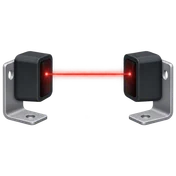
Your opener has two small sensors, one on each side of the door near the floor. One sends an invisible infrared beam across the opening and the other receives it. LiftMaster and DASMA both say the beam should sit no higher than 6 inches above the floor. If anything breaks that beam while the door is closing, the opener reverses the door back to fully open.
This isn't an optional extra. DASMA's inspection checklist notes that federal law requires residential openers made after 1992 to have both built-in force sensing and a secondary safety device such as photo-eye sensors, meeting the UL 325 standard. The sensors only affect closing, so a sensor problem never stops the door from opening.
How to reset garage door sensors, step by step
Most sensors have no reset button. Resetting them means getting both sensors to see each other again, then confirming the safety reverse works. Here's the order we'd follow.
- Clear the path: Move anything near the door opening, including bins, bikes, leaves and snow. Even a cobweb across a lens can block the beam.
- Read the lights: On LiftMaster and Chamberlain sensors, the sending eye has an amber light and the receiving eye a green one. On Genie Safe-T-Beams, one sensor shows red and the other green. Both lights should glow steady.
- Clean both lenses: Wipe them with a soft, dry cloth. Genie lists dirty lenses alongside obstructions and loose wiring as common causes of a flashing light.
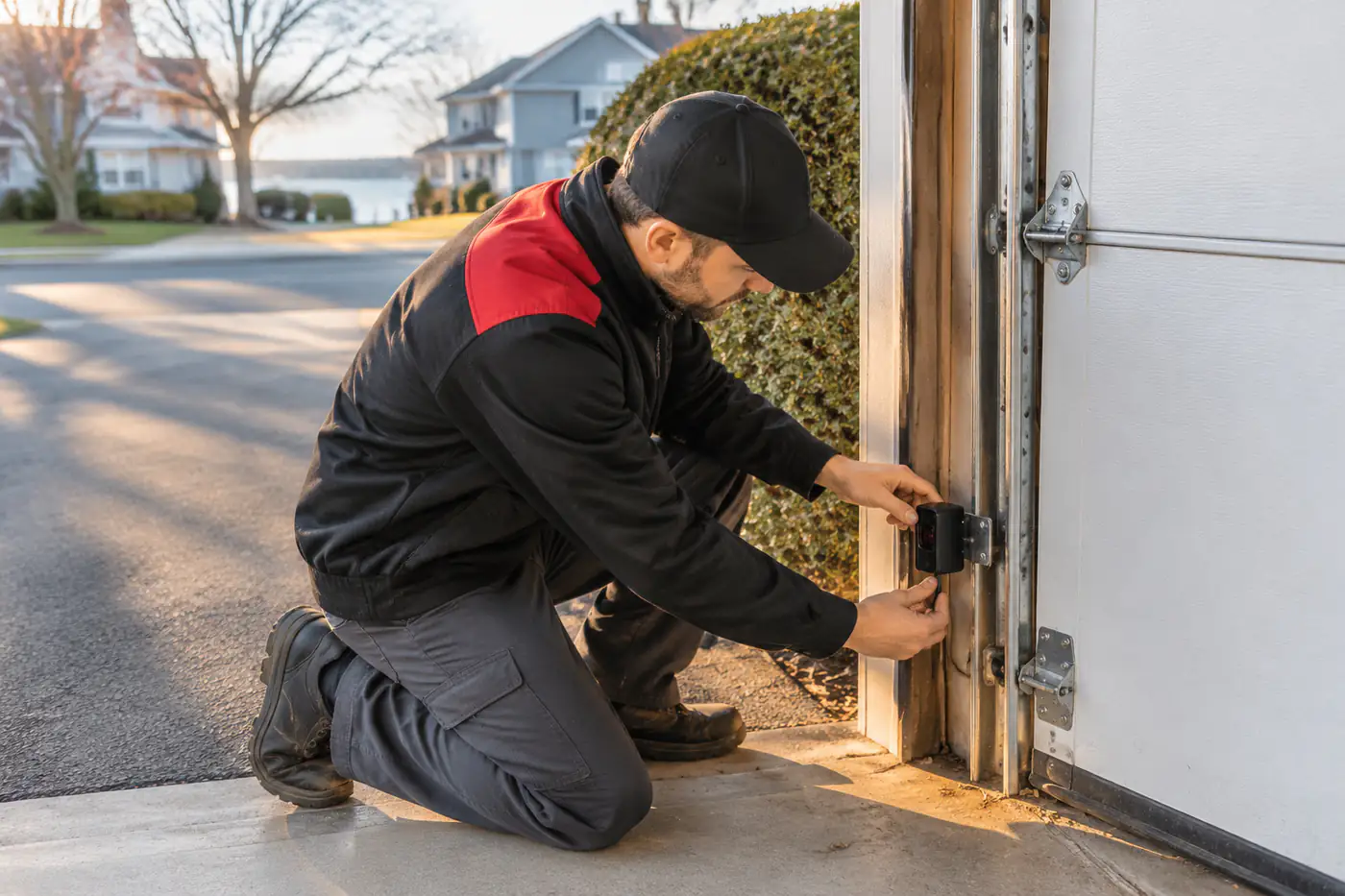
- Realign the sensors: Loosen the wing nut on the receiving sensor, point it straight at the sending sensor, and tighten it once the light holds steady. LiftMaster says that if it still blinks, adjust the sending sensor the same way.
- Check the brackets: A sensor bracket knocked by a car bumper, a lawn mower or a kid's bike can sit crooked even after you aim the sensor. Make sure each bracket is tight to the track or wall.
- Power-cycle the opener: Unplug it for a minute and plug it back in. It won't fix alignment, but it rules out a control board that got confused after a power blip.
- Test it twice: Close the door with the remote. Then follow DASMA's checks: wave an object through the beam while the door closes, and lay a 2x4 flat under the center of the door. The door should reverse and go back to fully open both times.
Why is one garage door sensor light blinking?
On LiftMaster and Chamberlain sensors, a steady amber light on the sending sensor with a green light that's off or flickering on the receiving side usually means the sensors are misaligned or something is blocking the beam. LiftMaster adds that if the green light won't glow steady even when the sensors are aimed correctly, there's likely an open or shorted wire. At the same time, the opener's main lights may flash 10 times when you try to close the door.
On Genie Safe-T-Beams, a flashing red light means the system has detected a fault. Genie's fixes are the same basics: clean the lenses, check for obstructions and loose wires, and make sure the sensors sit about 5 to 6 inches off the floor, facing each other. If neither sensor lights at all, look at the wiring and the opener's power before blaming the sensors. Our opener not working guide covers power and control problems.
Can sunlight affect garage door sensors?
Yes, it's a known problem. LiftMaster explains that sunlight shining into the receiving sensor can drown out the infrared beam from the sending sensor, so the opener acts as if something is in the way. Genie says the same about sun or any bright light hitting the lens. The giveaway is timing: the door closes fine most of the day but refuses at one particular hour.
Garages facing west or south get this most, especially in winter when the sun sits low in the late afternoon. The usual fixes are to swap the two sensors so the receiving eye sits on the shaded side, which LiftMaster suggests, or to add a shield or a sensor with a lens cover, which Genie offers on its newer Safe-T-Beams.
Wiring and damage problems that need more than a wipe
Sensor wires run along the wall and track from each sensor up to the opener, which makes them easy to damage. Look for a staple driven through the wire, insulation chewed by mice, a wire pinched behind a shelf, or a loose wire at the terminals on the back of the opener. LiftMaster's wiring guide has the white wires on the white terminal and the white-and-black wires on the black or grey terminal. If you're not comfortable working on the opener, unplug it and leave this for a technician.
Water and corrosion are the other enemy. Sensors sit a few inches off a floor that gets rain, snowmelt and road salt tracked in all winter, and older sensors eventually fail. Angi's 2026 cost data puts professional sensor repair at $150 to $250, and the garage door repair cost guide lists other common repairs.
What not to do, and when to call
Don't remove the sensors, tape them together, mount them higher, or wire around them to make the door close. They're the part of the system that keeps a closing door from landing on a child, a pet or a car. On some older LiftMaster and Chamberlain openers, holding the wall button down will close the door with a sensor fault, but LiftMaster says openers and logic boards made after February 3, 2022 don't allow it. Use it only as a stopgap, watching the door the whole way.
Call when a light won't come on after realigning, a wire is damaged, the door still reverses with both lights steady, or the door fails the 2x4 test. Our sensor repair service handles alignment, wiring and replacement on all major brands, and our opener repair page covers the rest of the system. If the door still won't close, see our guide for a garage door that won't close or book a visit. Every visit ends with an auto-reverse safety test.
Questions people ask
How do I reset the safety sensors on my garage door?
Most sensors have no reset button, so resetting means restoring the beam. Clear anything in the way, wipe both lenses, then loosen the wing nut on the receiving sensor and aim it until its light glows steady. Test by closing the door with the remote, then check that it reverses when you wave an object through the beam.
Why is one garage door sensor light blinking?
A blinking or flickering light usually means the sensors can't see each other because they're misaligned, dirty or blocked. On LiftMaster and Chamberlain sensors it's normally the green receiving light, and on Genie sensors a flashing red light signals a fault. If the light still won't hold steady after cleaning and realigning, check the wiring.
Can sunlight affect garage door sensors?
Yes, it can. Direct sun shining into the receiving sensor can overpower the infrared beam, so the door refuses to close at the same time each day. Swapping the sensors so the receiver faces away from the sun, or adding a shield, usually solves it.
Can I use my garage door without the sensors?
You shouldn't, and on most openers you can't. Openers made since 1993 must have secondary safety protection like photo eyes, and they won't close normally with the sensors disconnected. Some older units let you close the door by holding the wall button, but that's a stopgap until the sensors are fixed.
Rather have it handled?
Our technicians handle sensor repair across Jackson, Ocean County and Monmouth County, with a written price before any work starts.
Sources
- support.partner.liftmaster.com/s/article/Why-do-the-lights-on-my-garage-door-opener-flash-and-my-door-will-not-close-1484145609322
- support.partner.liftmaster.com/s/article/How-To-Troubleshoot-The-Safety-Reversing-Sensors-When-One-LED-Is-Off-Or-Flickering
- support.geniecompany.com/app/answers/detail/a_id/1237/~/why-is-the-red-safe-t-beam%C2%AE-light-blinking
- store.geniecompany.com/blogs/genie-blog/genie-safe-t-beams-explained
- store.geniecompany.com/blogs/genie-blog/garage-door-wont-open-or-close-try-these-tips
- dasma.com/wp-content/uploads/2023/04/TDS167.pdf
- law.cornell.edu/cfr/text/16/1211.7
- angi.com/articles/most-common-garage-door-repair-costs.htm