Garage door opener installation is a good moment to look at more than the opener. A new motor won't make up for a door with tired springs or worn rollers, and hanging a strong opener on an unbalanced door just wears out the new opener sooner. So every install starts with the door: we check the balance by hand, look over the springs, cables and rollers, and tell you if anything needs attention before the new opener goes up.
Then comes the choice of opener. The right one depends on what sits above the garage, how high the ceiling is, what kind of springs the door has, and how you want to control it. Below is how the main drive types compare, what smart control and battery backup do in practice, what installation day looks like, and how long it takes.
What to look for
Chain-drive openers
Strong and simple. A good fit for detached garages and heavy doors where some noise doesn't matter.
Belt-drive openers
A reinforced belt in place of the chain, with far less noise and vibration. Our usual pick for garages under bedrooms.
Wall-mount openers
Mounted beside the door on the torsion bar, leaving the ceiling clear. Requires a door with torsion springs.
Smart and Wi-Fi control
Open, close and check the door from your phone, with an alert when it's been left open.
Battery backup
Keeps the door working for a limited number of cycles during a power outage, which matters in storm season.
Remotes, keypads and car buttons
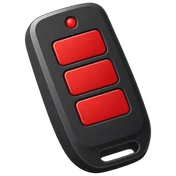
New remotes, an outdoor keypad, and programming for the built-in opener buttons in your car.


What type of garage door opener is best?
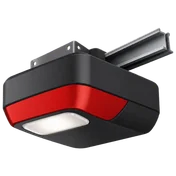
There isn't one best opener, but there's usually a best one for your garage. Here's how the main drive types compare.
| Drive type | How it works | Noise | Best fit |
|---|---|---|---|
| Chain drive | A steel chain pulls a trolley along a rail | Loudest | Detached garages, heavy doors, tighter budgets |
| Belt drive | A reinforced belt pulls the trolley along the rail | Much lower | Attached garages with rooms above or beside them |
| Wall mount (jackshaft) | A motor beside the door turns the torsion bar directly | Low, and off the ceiling | High ceilings, overhead storage, torsion spring doors only |
| Screw drive | A threaded steel rod moves the trolley | Moderate | Few moving parts; grease on older units stiffens in deep cold |
Matching the opener to your garage
In a lot of Ocean and Monmouth County homes the garage is attached, with a bedroom or family room above it. There, a belt drive or a wall-mount opener makes a noticeable difference at 6 AM. In a detached garage, or one with nothing overhead, a chain drive does the job well. Many current openers use DC motors with soft start and stop, which is easier on the door as well as your ears. Our best garage door openers guide goes deeper on features.
A wall-mount, or jackshaft, opener sits on the wall next to the door and turns the torsion bar directly, so there's no rail across the ceiling. That frees space for overhead storage, a car lift or a tall ceiling, and many models add an automatic lock for the door. The catch is that it only works with torsion springs, and it needs clear wall space beside the door and room around the end of the bar. If your door has extension springs, a conversion to torsion comes first, and we can price both together.
Smart control, myQ and battery backup
A smart garage door opener connects to your home Wi-Fi so you can open, close and check the door from your phone, get an alert when it's left open, and let a delivery or a dog walker in without handing out a code. Many current LiftMaster and Chamberlain openers have myQ built in. If your current opener still works well and has safety sensors, a smart controller can often be added to it instead; our remote and keypad page covers that route.
Battery backup keeps the opener running through a power outage for a limited number of cycles. After a nor'easter or a summer storm knocks the power out, that's the difference between driving in and wrestling the door by hand. One more detail: some LED bulbs interfere with remote signals, so use bulbs labeled for garage door openers or the opener's built-in lighting.
What garage door opener installation includes, and how long it takes
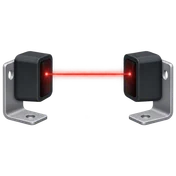
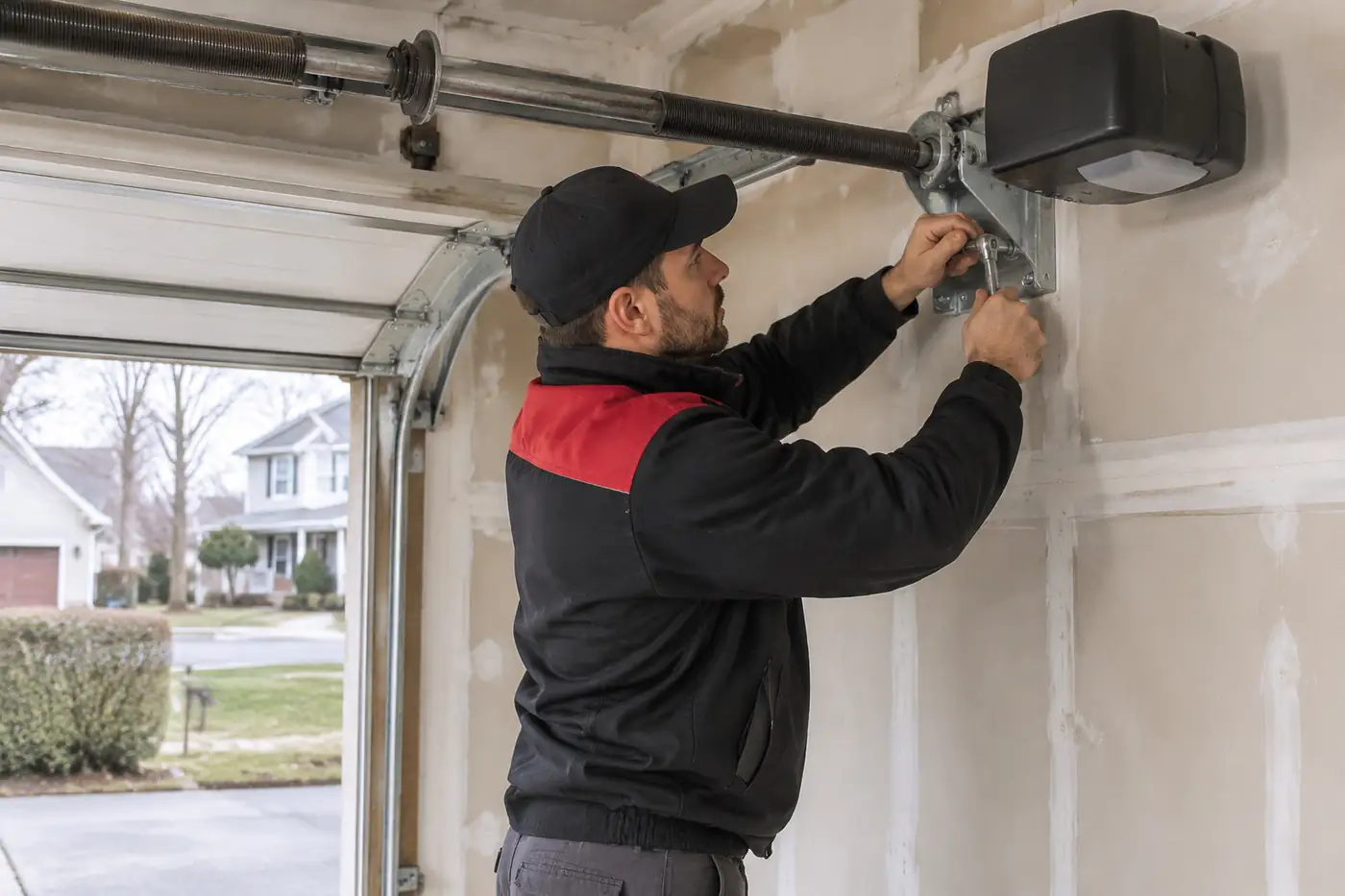
On install day we take down the old opener and haul it away, mount the new header bracket and rail or the wall unit, and add a reinforcing strut to the top section if the door needs one to handle the opener's pull. New safety sensors go in 4 to 6 inches above the floor, where federal safety guidance puts them. We mount the wall console out of children's reach, program your remotes, keypad and car buttons, set the travel limits and force, and finish with a balance check and the auto-reverse test.
A straightforward replacement in a garage with a ceiling outlet usually takes a few hours. Wall-mount installs, first-time installs on a door that never had an opener, and doors that need spring or roller work first take longer. The opener plugs into a standard outlet near the motor, so if there's no outlet where the new unit will sit, have an electrician add one before install day. Typical price ranges are in our opener installation cost guide, and we give you a written price for your garage before any work starts.
How the visit works
Check the door
We test the door's balance by hand and look over springs, cables and rollers, since a new opener can't fix a door that fights it.
Pick the opener
We go over drive types, smart features and battery backup for your garage, then give you a written price.
Install and program
Old unit out, new opener in, with new sensors, wall console, keypad, remotes and car buttons programmed.
Set and safety-test
Limits and force are set for your door, then a balance check and an auto-reverse test before we show you the release and the app.
Questions people ask
How much does it cost to have a new garage door opener put in?
It depends on the drive type, the features you want, and whether the door needs work first. We give you a written price onsite, and the estimate is free. For typical ranges from national cost surveys, see our opener installation cost guide.
What type of garage door opener is best?
For an attached garage with living space above, a belt drive or a wall-mount opener is usually best because of the lower noise. For a detached garage or a heavy door, a chain drive is a durable, sensible choice. Whatever the drive, battery backup and Wi-Fi control are worth having.
How long does it take to install a garage door opener?
A straightforward replacement usually takes a few hours. Wall-mount openers, first-time installs and doors that need repairs first take longer. We'll tell you what to expect when we give you the written price.
Will a new opener work with my old door?
Usually, as long as the door is balanced and in good repair. A heavy or binding door should be fixed first, and lighter doors may need a reinforcing strut on the top section. Wall-mount openers require torsion springs.
Is a smart garage door opener worth it?
It's worth it if you want to check the door from work, get an alert when it's left open, or let people in remotely. If your opener is in good shape, a smart controller can add those features without replacing it.
Should I repair my old opener instead?
If it's under ten years old and has photo-eye sensors, a repair is often the better value. See garage door opener repair and our opener not working guide to narrow down the fault first.