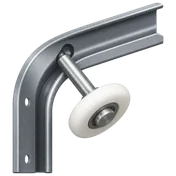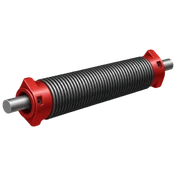
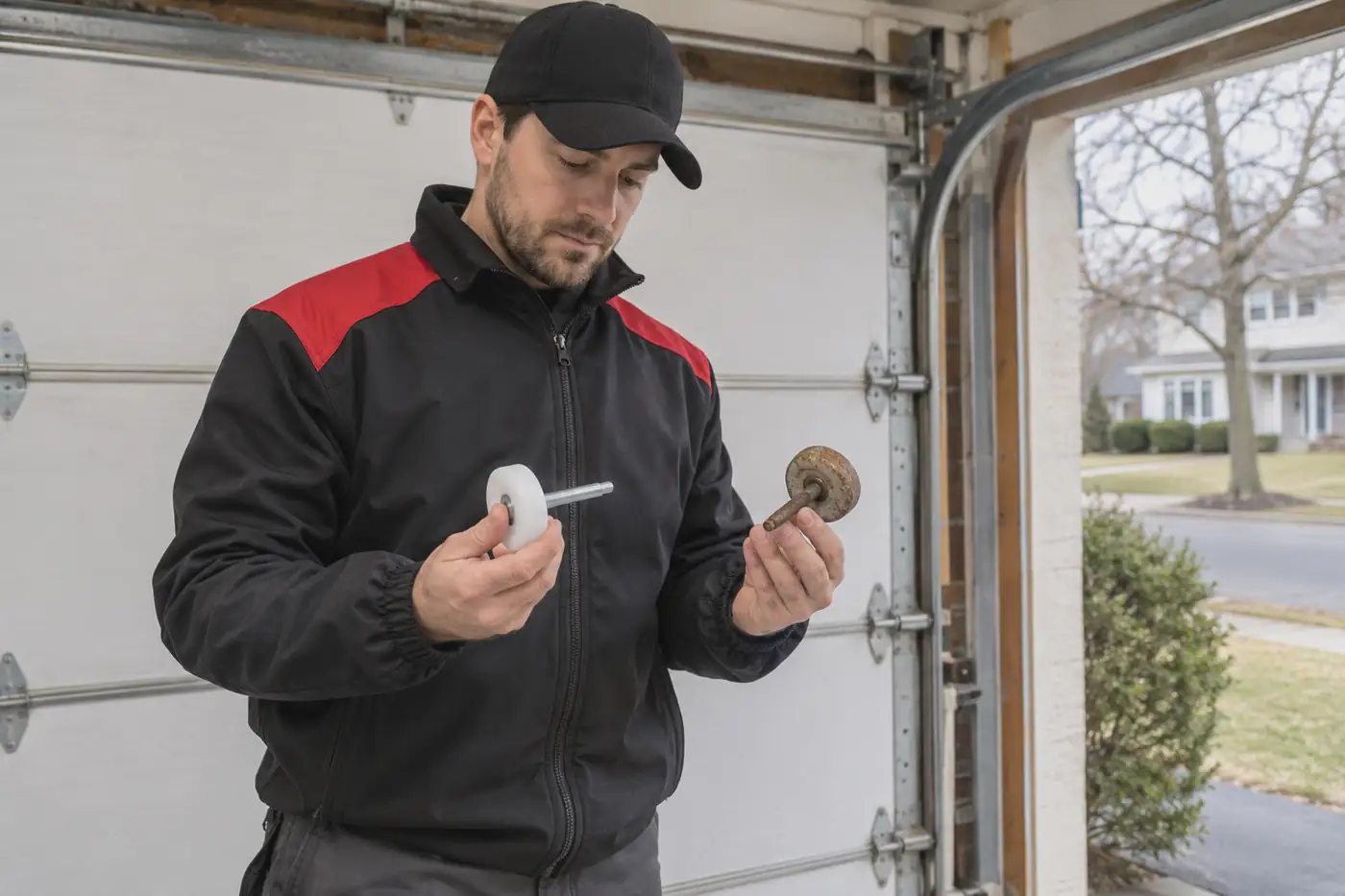
Garage door roller replacement is the fix for most doors that rumble, grind or shake on the way up. Rollers sit at each hinge line and at the top and bottom corners of the door, so a typical four-section door has ten of them, and they ride in the tracks every time the door moves. When the wheels wear flat or crack, or their bearings rust, the door stops rolling and starts dragging.
Rollers and hinges are small parts, but they do a lot of work. A worn roller puts extra drag on the springs and the opener, and a cracked hinge lets the sections flex and wobble against each other. Roller replacement is often done along with a tune-up, and the difference in sound and feel is usually obvious the first time the door runs.
What to look for
Grinding or rumbling
Dry or worn bearings grind and rumble, worst in the cold, when whatever grease is left has thickened.
Door shakes or wobbles
Flat-spotted or wobbly wheels make the door jerk and shudder along the track instead of rolling.
Cracked or chipped wheels
Cheap nylon wheels crack and chip with age, and plain steel wheels wear flat and develop a groove.
Cracked hinges or split stiles
Hinges crack at the knuckle, or the steel where they're screwed in tears loose, letting the sections flex.
Rust on rollers and bearings
Near the shore, steel rollers and bearings rust until they stop turning and slide in the track instead.
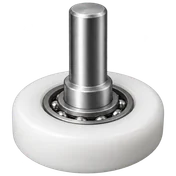


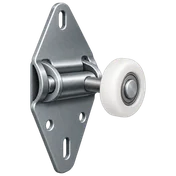

Are nylon garage door rollers better than steel?
For most homes, yes, as long as they're the right kind of nylon roller. Here's how the common types compare.
- Cheap rollers with no bearings are often rated for around 10,000 cycles, about what a standard spring gets.
- Good sealed-bearing nylon rollers carry much higher ratings and can outlast the door's springs.
- Most residential doors take a 2-inch roller, but stem length varies by door, so we match it to yours.
| Roller type | What it's like | Where it fits |
|---|---|---|
| Steel, no bearings | Cheapest and loudest; wears flat; often original on builder-grade doors | Not worth putting back on |
| Nylon, no bearings | Cheap; wheels crack and wear quickly | Light-duty doors only |
| Steel with ball bearings | Strong and handles heavy doors; louder than nylon; bearings need occasional oil | Heavy wood doors, detached garages |
| Nylon with sealed ball bearings | Far less noise and vibration, no lubrication needed on the wheel, long life | Most residential doors, especially under living space |
How often should garage door rollers be replaced?
There's no fixed schedule, since it depends on the roller and how hard the door works. Cheap rollers on a busy door can be worn out in a handful of years, while good sealed-bearing rollers often last a decade or more. Check them once a year with the door closed. Replace them when wheels are cracked, chipped or worn into a groove, when they wobble on their stems, or when the bearings are rusted and the wheel no longer spins freely.
Two things shorten roller life in our area. Shore humidity and salt rust the bearings on steel rollers, and once a bearing seizes, the roller slides along the track and wears flat on one side. And the cold of a New Jersey winter thickens whatever grease is left in old bearings, which is why so many doors sound their worst in January. Our noisy garage door guide explains which sounds point to rollers and which point elsewhere.
Garage door hinge repair: cracked hinges and split stiles
Hinges join the sections and hold the rollers at each side. They're numbered by position, and each step up holds its roller a little farther from the door than the one below, which is what lets the door press tight against the stop molding as it closes. A hinge can crack at the knuckle, but the more common failure is the end stile of a steel door tearing where the hinge screws go in. A loose hinge lets the sections flex as the door bends over the curve of the track, and a flexing door pops out of the track sooner or later.
We replace cracked hinges with the correct numbered hinge, and where a stile has torn, we reinforce it with a repair plate or move the fasteners to solid steel. If several stiles are split on an older door, that's a sign the door is near the end of its life, and panel replacement or a new door may be the better spend.
What garage door roller replacement involves
We replace rollers one hinge at a time with the door closed, so the door stays supported throughout. The bottom rollers are different. They sit in the bottom brackets, which the lift cables attach to, and those brackets carry the full tension of the springs. That's the one part of a roller job a homeowner should never take on, and on most doors it means taking tension off the springs first. If a roller has already popped out of the track, see off-track repair instead.
While we're there, we check track alignment, tighten loose hardware, lubricate the hinges, bearings and springs, and check the door's balance and the opener's force setting, since a smoother door often needs less force to run. If the springs look tired, we'll note it on the written price; see spring repair for why they wear out.
How the visit works
Check every roller and hinge
We look at each wheel, bearing, stem and hinge, plus the track and the stiles where hinges fasten.
Choose the roller
We recommend the roller type that fits your door and how you use it, then give you a written price.
Swap one at a time
Rollers and hinges are replaced one position at a time with the door closed and supported, with the bottom brackets handled under controlled tension.
Adjust, lubricate and test
We align the track, lubricate the moving parts, balance the door, and finish with the opener's auto-reverse test.
Questions people ask
How often should garage door rollers be replaced?
There's no set interval: replace them when the wheels crack, wear flat or wobble, or the bearings rust and stop turning. Cheap rollers on a busy door can wear out in a few years, while sealed-bearing nylon rollers often last a decade or more. A yearly look with the door closed tells you where you stand.
Are nylon garage door rollers better than steel?
For most homes, nylon rollers with sealed ball bearings are the better choice: they make far less noise, need no lubrication on the wheel, and last a long time. Steel rollers with bearings still make sense on very heavy wood doors. Avoid cheap rollers of either kind that have no bearings.
Can I spray WD-40 on garage door rollers?
Standard WD-40 cleans but doesn't leave lasting lubrication, and it can wash grease out of the bearings. On steel rollers with exposed bearings, a little garage door lubricant on the bearing is enough, and sealed nylon rollers need nothing on the wheel. Never grease the track itself, which only collects dirt; our lubrication and maintenance checklist covers each part.
Why are my garage door rollers so noisy?
Noisy rollers usually have dry or rusted bearings, flat spots, or cracked wheels. Loose hinges and track bolts add rattles of their own. If lubricating the bearings doesn't help, the rollers are worn and replacing them is the fix.
Can I replace garage door rollers myself?
The rollers in the middle hinges can be swapped by a handy homeowner with the door closed and the opener unplugged, one hinge at a time. The bottom rollers sit in brackets under spring tension and should be left to a technician. If you're not sure which is which, have us do the full set.