
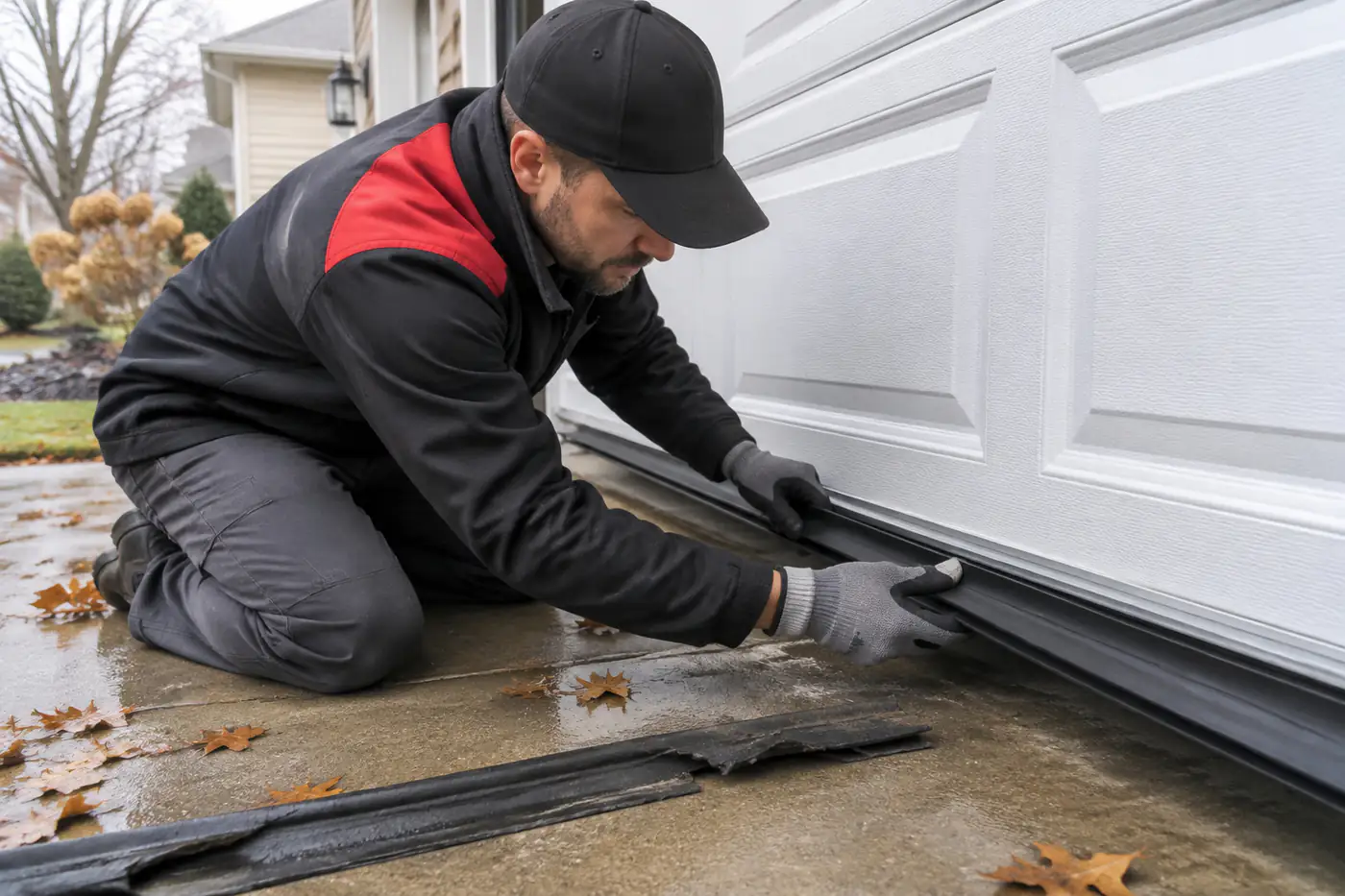
Garage door weather stripping takes more abuse than any other part of the door. The bottom seal gets pressed into the concrete every time the door closes, frozen to the slab in January and baked by the sun in July. Once it cracks or flattens, you'll see daylight under the door, find leaves piled in the corners, and feel a draft in any room that shares a wall with the garage.
New seals are a small job that makes a noticeable difference, especially on an attached garage or one with a bonus room above. They also protect the door itself, because a steel door that sits in standing water rusts from the bottom edge up; if yours already has, see panel replacement. We match the seal to the retainer on your door, then set the opener's close position so the new seal presses down evenly without making the door reverse.
What to look for
Daylight under the door
If you can see light along the floor with the door closed, the bottom seal has shrunk, torn or flattened.
Water on the garage floor
Rain blowing in or running down the driveway means the seal isn't meeting the slab, or the floor needs a threshold.
Mice, leaves and bugs inside
Gaps at the bottom corners are the easiest way in for mice, and for the leaves that blow down every fall.
Drafty rooms next to the garage
Cold air leaking around the door chills mudrooms, laundry rooms and bedrooms built over the garage.
Cracked or brittle side seals
The vinyl flap on the side and top stop molding hardens and pulls away from the door after years of sun.



Which garage door weather stripping does your door have?
Most doors have three or four seals, and each one fails in its own way. We check all of them, because a new bottom seal won't stop a draft that's coming around a side stop that has warped away from the door. Side stops should touch the door lightly; nailed on too tight, they drag, and the opener feels that drag on every trip.
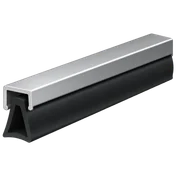
- Bottom seal: the rubber or vinyl strip that slides into an aluminum retainer along the bottom of the door, or is nailed to the bottom of older wood doors
- Perimeter stop molding: the strips along both sides and across the top, with a soft flap that rests against the face of the door
- Threshold seal: an optional raised strip glued to the concrete that the door closes against, used where water runs in
- Section joint seals: some insulated doors also seal between sections, built into the panel edges
What type of bottom seal does my garage door need?
The retainer on the bottom of your door decides that, not the brand of the seal. Most steel doors from the last few decades have an aluminum retainer with two channels. The seal's edges, either T-shaped or round beads, slide into those channels, and the seal hangs below as a flat loop or as a taller, rounder bulb. Older doors may have a J-shaped channel instead, and wood doors usually have a flat seal nailed or screwed to the bottom rail.
To check yours, pull one end of the old seal out a few inches and look at the edge shape and the width of the slot. If your floor is uneven, which is common on older slabs that have settled, a taller bulb seal can fill dips that a standard seal leaves open. When the retainer itself is bent or corroded, as it often is on shore homes, we replace the retainer along with the seal.
How do I stop water from coming under my garage door?
Start by finding where the water comes in. If it's along the whole width, the bottom seal is worn or too thin for the gaps in the floor. If it's at one corner, the slab has settled or the door isn't sitting level. If water runs down the driveway toward the garage in every storm, a door seal alone won't stop it.
That's where a threshold seal helps. It's a rubber hump glued to the concrete where the door closes, so water has to climb over it to get in, and we pair it with a new bottom seal so the two meet without a gap. It's low enough to drive over, but snow shovels and plow blades can catch the edge, so clear snow carefully near it. On shore homes and doors facing open water, wind pushes rain through the sides and top as well, so the stop molding matters more there. For a driveway that pitches hard toward the house or a slab that has sunk, the lasting fix is drainage or concrete work, and we'll tell you plainly when that's the case. Our guide to garage doors for shore homes covers storm and salt issues in more depth.
How often should garage door weather stripping be replaced?
There's no fixed schedule, because sun, traffic and exposure vary from door to door. Check the bottom seal every fall before the first freeze, and replace it when it's cracked, torn, too stiff to flex, or flattened enough that light shows underneath. Many seals last several years. A south- or west-facing door that bakes in the afternoon sun, or one a few blocks from the ocean, goes sooner. Side and top stop molding usually lasts longer, until the flap stiffens or the strip warps away from the door.
In winter, a seal frozen to the slab is the most common way a good one gets ruined. If the door won't open on an icy morning, don't keep pressing the button. Free it gently and dust the seal with silicone spray before the next cold snap. Seal checks are part of every garage door maintenance visit, and our lubrication and maintenance checklist shows what to look at yourself. New seals also pay off more on an insulated garage door, where the door itself is no longer the weak spot.
How the visit works
Find the leak
We close the door and check for daylight and drafts along the floor, sides and top, then look at the retainer and the slab.
Match the profile
We identify the retainer type and floor condition and pick a bottom seal, stop molding or threshold that fits your door.
Install and adjust
Old seals come out, retainers get cleaned or replaced, new seals go in, and the opener's close limit is set so the door seals without reversing.
Test the door
We finish with a balance check and an auto-reverse test, so the new seal doesn't change how safely the door closes.
Questions people ask
How often should garage door weather stripping be replaced?
Whenever it's cracked, hardened or flattened enough to let light through, which for many bottom seals means every several years. Doors facing the afternoon sun or close to the ocean wear seals out faster. Check yours every fall before the first freeze.
How do I stop water from coming under my garage door?
Replace a worn bottom seal first, choosing a taller bulb seal if the floor is uneven. If water runs down the driveway toward the door, add a threshold seal glued to the floor where the door closes. A slab that has sunk or pitches toward the garage may also need drainage or concrete work.
What type of bottom seal does my garage door need?
The one that fits the retainer on the bottom of your door. Most steel doors use a two-channel aluminum retainer that takes a seal with T-shaped or beaded edges, while older doors may use a J-channel and wood doors a nailed-on seal. Pull out one end of the old seal to see the edge shape, or have us match it.
Can a new bottom seal make my garage door reverse?
It can, if the new seal is taller than the old one and the opener's close limit isn't adjusted. The opener reads the extra resistance at the floor as an obstruction and backs up. We reset the travel limit after installing seals and then run the auto-reverse test. If the door still reverses after that, look at the photo eyes on our garage door sensor repair page.
Will weather stripping keep mice out of the garage?
It closes the most common gap, which is under the door and at the bottom corners where the seal meets the side stops. Mice can chew through soft vinyl, so a garage with a rodent problem should also have its corners checked and other openings closed up.
Is a threshold seal a good idea with New Jersey winters?
Usually, if water is your problem. It's low enough to drive over, but shovels and plow blades can catch its edge, so clear snow carefully around it. It doesn't replace a good bottom seal, since the two work together.