
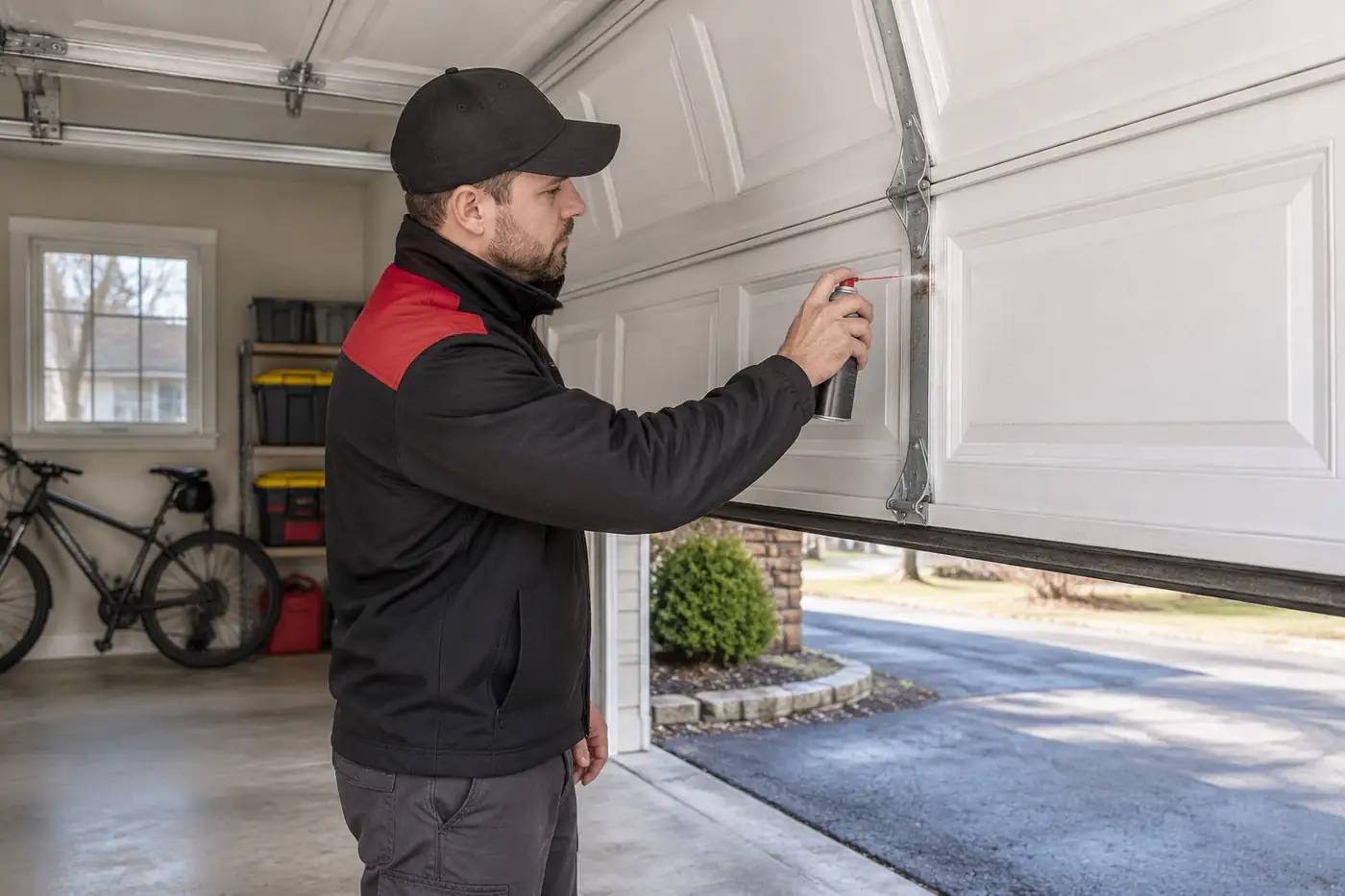
Garage door maintenance is the cheapest repair you'll never have to make. A lot of the breakdowns we see in Jackson, Howell and Toms River started months earlier as a door that felt heavy, a roller that squealed, or a lift cable with a few broken strands at the bottom bracket. A tune-up is where those things get caught while they're still small.
Your garage door is the largest moving object in the house. Standard torsion springs are commonly built for about 10,000 cycles, and every open and close counts as one. Add New Jersey's freeze-thaw winters, plus salt air within a few miles of the ocean or Barnegat Bay, and parts wear faster than the calendar suggests. A yearly visit keeps the door balanced so the opener isn't doing work the springs should be doing.
What to look for
Grinding, squealing or popping
Dry hinges and worn roller bearings get loud first. New noise is usually the earliest sign a part is wearing.
Door feels heavy or drifts
If the door won't stay put halfway up with the opener disconnected, the springs are out of balance or wearing out.
Frayed or loose cables
Broken strands near the bottom brackets, or slack cable on the drums, mean a cable is close to letting go.
Door reverses or won't close
Misaligned photo eyes or opener force set too low will stop the door short. Both get checked on every tune-up.
Daylight or water at the floor
A flattened bottom seal lets in cold air, leaves and rain, and it's a quick fix while we're already there.
No service in a year or more
Even a door that seems fine benefits from a yearly check, especially in shore towns where salt air rusts hardware.
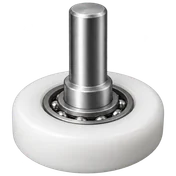
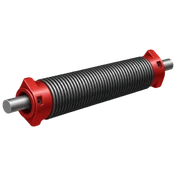
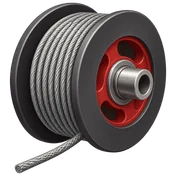


What our garage door maintenance tune-up includes
A tune-up is a full inspection with adjustments, not a quick spray of lubricant. We start with the door, because an opener can only be as healthy as the door it lifts, then move to the opener and finish with the safety systems. If a part is near the end of its life, you get a written price before anything beyond the tune-up happens. Here's the checklist we work through.
- Balance test with the opener disconnected, with spring tension adjusted if the door drifts
- Torsion or extension springs checked for gaps, rust and stretch
- Lift cables and drums checked for fraying, rust and a clean wrap
- Rollers, hinges, end bearings and track brackets inspected and tightened
- Tracks checked for alignment and wiped clean, never greased
- Hinges, steel roller bearings and springs lubricated with a garage door spray
- Opener rail, trolley, chain or belt tension, travel limits and force settings checked
- Photo-eye alignment and wiring checked, then an auto-reverse test with a board on the floor
- Bottom seal, side weather stripping and the emergency release checked
How often should a garage door be serviced?
For most homes, once a year is the right rhythm for a professional tune-up. If the garage is the door your family actually comes and goes through, if it cycles many times a day, or if you live close to the ocean or the bay, twice a year is better.
Between visits, a few minutes a month is enough. The Consumer Product Safety Commission recommends testing the opener's auto-reverse every 30 days: lay a 2x4 flat on the floor in the door's path and close the door. It should reverse as soon as it touches the board. Also watch the door run once and listen for new noises. If you hear something new, our noisy garage door guide helps you sort a harmless squeak from a part that's about to fail.
What lubricant is best for garage doors, and where does it go?
Use a spray lubricant made for garage doors, either silicone-based or white lithium. Silicone holds up well through hot summers and freezing winters. Skip regular WD-40 and household oil. They don't last, and they attract dust that wears parts faster.
Where it goes matters as much as what you use. Lubricate the hinge pivots, the bearings of steel rollers, the end bearing plates and the coils of torsion springs, then wipe off the excess. Leave the tracks alone: rollers are meant to roll, and grease in the track collects grit that makes them skid. Wipe the tracks clean instead, and skip nylon rollers with sealed bearings. Every three to six months is plenty for most homes, more often near salt water. Screw-drive openers want a light coat of the maker's grease on the threaded rod. Our lubrication and maintenance checklist walks through it step by step.
Why New Jersey winters and shore air are hard on garage doors
Cold stiffens old grease, so the opener pushes against more resistance on the coldest mornings, and that's usually when a tired spring or a weak opener gives out. Bottom seals can also freeze to the slab overnight. If the opener strains to break the seal loose, it can tear the rubber or trip the force setting. A light coat of silicone spray on the seal before a cold snap helps.
Closer to the water, salt air is the bigger enemy. In Point Pleasant, Brick and the bayfront parts of Toms River and Berkeley, springs rust, roller bearings seize and hinges crack much sooner than the same parts inland. Near the shore, plan on lubricating more often, rinse the outside of the door with fresh water a few times a year, and read our guide to garage doors for shore homes. Worn seals are covered on our weather seal replacement page.
Garage door balance: the check that matters most
A balanced door is one the springs hold in place on their own. To check yours, close the door, pull the red emergency release to disconnect the opener, and lift the door by hand to about waist height. It should stay there, or drift only slightly. If it drops or climbs, the springs are out of adjustment or wearing out, and the opener has been doing the heavy lifting.
If it fails, stop there. Spring and cable adjustments are jobs for a technician with winding bars, because the springs store enough energy to cause serious injury. Run the opener and the trolley will usually reconnect. If the springs are the problem, our garage door spring repair page explains the fix, and worn or cracked rollers are covered under roller replacement.
How the visit works
Inspect the door and opener
We run the door, listen, and look over springs, cables, drums, rollers, hinges and tracks before touching anything.
Adjust, tighten and lubricate
Hardware gets tightened, tracks cleaned, moving parts lubricated, and opener force and travel limits set to the door.
Balance and safety tests
Every visit ends with a balance check and an auto-reverse safety test, along with a photo-eye check.
Written findings and prices
If a part is close to failing, you get a written price and decide. Nothing extra starts without your approval.
Questions people ask
How often should a garage door be serviced?
Once a year for most homes, and twice a year if the door gets heavy daily use or you live near the ocean or bay. In between, test the auto-reverse monthly with a 2x4 laid flat in the door's path. Lubricate the moving parts every three to six months.
What lubricant is best for garage doors?
A silicone-based or white lithium spray made for garage doors. Silicone handles New Jersey's temperature swings well. Avoid regular WD-40 and motor oil, which don't last and collect dirt.
How do I lubricate my automatic garage door?
Close the door and unplug the opener, then spray the hinge pivots, steel roller bearings, end bearing plates and torsion spring coils, and wipe off the excess. Leave the tracks clean and dry, and skip nylon rollers. Plug the opener back in and run the door a few times to spread the lubricant.
What does a garage door tune-up include?
Ours covers a balance test, spring and cable inspection, roller, hinge and track checks, lubrication, opener force and travel settings, and photo-eye alignment. It ends with an auto-reverse safety test. If we find a part that needs replacing, you get a written price first.
Can I do garage door maintenance myself?
You can handle the monthly auto-reverse test, lubrication and wiping the tracks. Leave springs, cables and bottom brackets to a technician, because they're under heavy tension and can cause serious injury if something slips.
Do garage doors need more maintenance near the shore?
They do, because salt air rusts springs, hinges and roller bearings faster. Lubricate more often, rinse the door with fresh water a few times a year, and consider a tune-up twice a year. Galvanized or coated parts are worth choosing when something gets replaced.