
A garage door installation starts with a tape measure and a few questions, not a catalog. The size of your opening, the room above and beside it, what's over the garage, and how close you are to salt water all narrow the choices before style comes into it. Then there's the look. On many homes the garage door takes up a big part of the front of the house, so it shapes how the whole place looks from the street.
Our free onsite estimates for new doors cover all of it: we measure, look at your existing framing and opener, talk through materials, insulation and styles, and give you a written price. Nothing is ordered until you approve it. Below is what we measure, how the main choices compare, what installation day involves, and when replacing makes more sense than repairing.
What to look for
Steel raised-panel doors
The everyday standard: durable, low upkeep, and available in a wide range of colors and panel designs.
Insulated doors
Polystyrene or polyurethane cores that stiffen the door, cut noise, and help garages under living space stay warmer.
Carriage-house doors
The look of swing-out barn doors on an overhead door, with decorative handles and strap hinges.
Modern flush and glass doors
Smooth flush panels or aluminum frames with frosted or clear glass for contemporary homes.
New tracks, springs and seals
Hardware sized to the new door's weight, plus a new bottom seal and perimeter weatherstripping.
Opener pairing
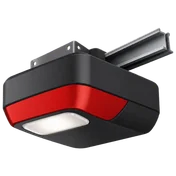
We reconnect and readjust your existing opener, or install a new one at the same visit.


How we measure for a new garage door
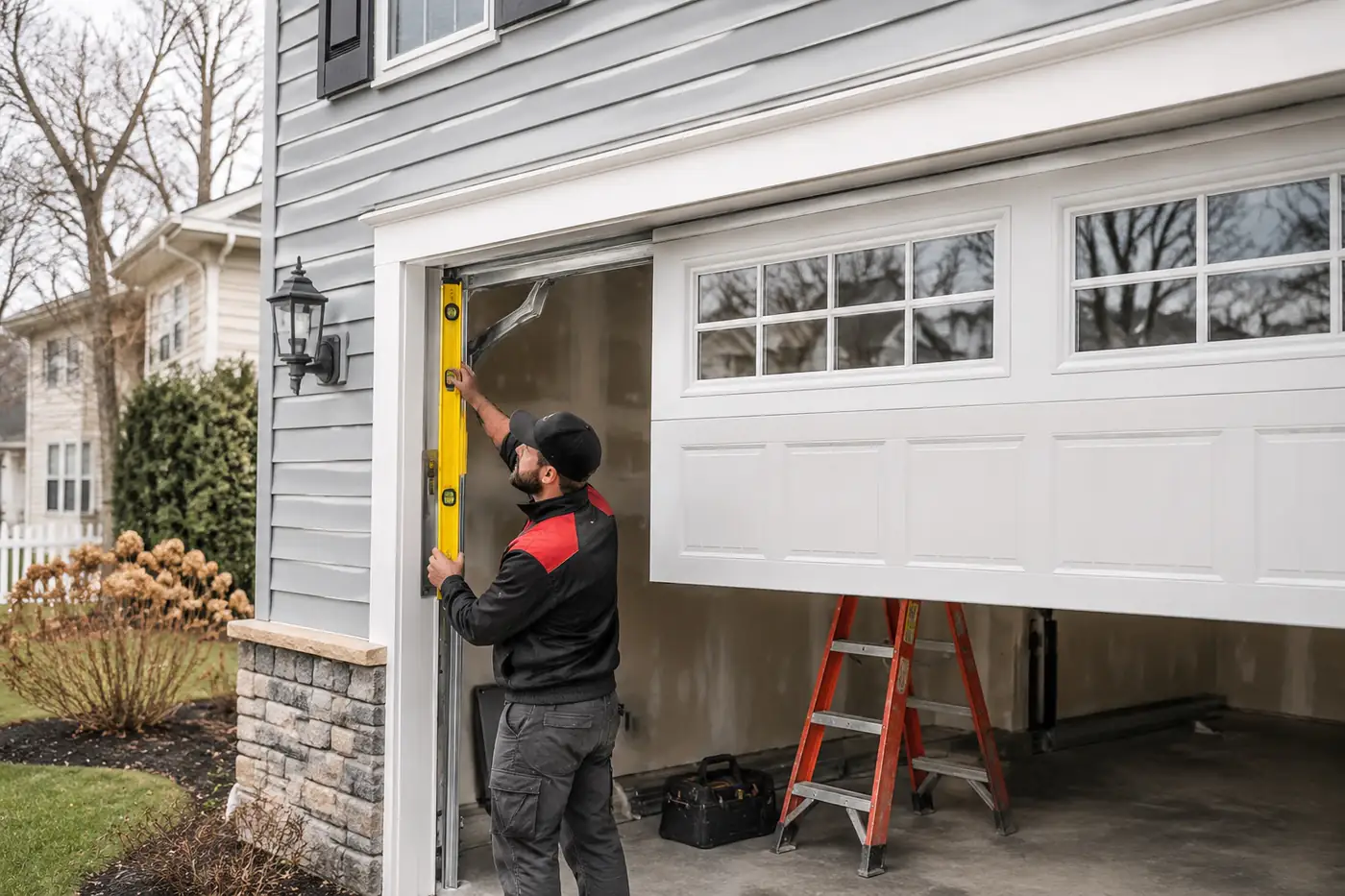
We measure the width and height of the finished opening, then the space around it: headroom above the opening, sideroom on each side for the vertical tracks and springs, and backroom, the depth into the garage the door needs when it's fully open. Standard torsion hardware needs roughly 10 to 12 inches of headroom, and garages with less can usually still take a door with low-headroom hardware. We also check that the jambs and header are sound, since the new tracks and spring brackets fasten to them.
Common sizes are 16 by 7 feet for two-car openings and 8 or 9 by 7 feet for singles, with taller 8-foot doors showing up more in newer construction. Our garage door sizes guide lists the standard options and what happens with an odd-sized opening.
Choosing material, insulation and style
Steel is the default for good reason: it's strong, holds paint, and needs little care. Thicker steel and insulated construction resist dents better. Wood and composite overlays suit carriage-house designs, aluminum and glass suit modern homes, and composite or fiberglass skins resist rot on doors that face weather head-on.
Insulation matters most when the garage is attached and has a room above it. Polystyrene panels are the budget option; injected polyurethane foam bonds to the steel, makes a stiffer door with less rattle, and usually carries a higher R-value. Manufacturers don't all measure R-value the same way, so compare construction as well as the number. Our insulated garage doors page explains the details, and garage door styles covers looks, colors and windows.
Near the shore, ask about rust-resistant hardware and a wind-rated door. Salt air works on springs, rollers and track bolts, and a door facing open water takes a beating in a nor'easter. If you live in a 55-and-over community or a development with an HOA, check its rules on door style and color before you choose. Our garage door brands guide compares what the major manufacturers offer.
What happens on garage door installation day
Most replacements take about a day once the door arrives. We take down the old door carefully, since its springs are still under tension, and haul it away. The new tracks go up plumb and level, fastened into solid framing, then the sections are stacked and hinged one at a time. New springs are sized to the new door's weight, because reusing old springs on a different door almost always leaves it out of balance.
We fit a new bottom seal and perimeter weatherstripping, reconnect your opener or install a new one, and set its limits and force for the new door. Then comes the balance check: with the opener disconnected, the door should hold at halfway on its own. Every install ends with an auto-reverse test and a walkthrough of the emergency release. If you'd like a new opener at the same time, see garage door opener installation.
When replacing beats repairing
A door that's 20 or more years old and uninsulated, with more than one damaged section or sections that are no longer made, is usually a better candidate for garage door replacement than another round of repairs. So is a door that's been patched repeatedly and still binds, or one that sits under a bedroom you'd like warmer. Our repair or replace guide goes through the decision, and our installation cost guide shows typical ranges from national cost surveys. For your own door, the number that counts is the written price we give you onsite through a free estimate.
How the visit works
Free onsite estimate
We measure the opening and the room around it, check your framing and opener, and go through materials, insulation and styles with you.
Written price and order
You get a written price for the door and installation. Once you approve it, we order the door in your size, style and color.
Removal and install
Old door out and hauled away; new tracks, sections, springs and seals in; opener reconnected or replaced.
Balance and safety test
We balance the door, set the opener, test auto-reverse, and show you the manual release before we leave.
Questions people ask
How much would it cost to install a garage door?
It depends on size, material, insulation, windows and hardware, so two doors that look similar can be priced very differently. We give you a written price after measuring, and the estimate is free. Typical ranges from national cost surveys are in our installation cost guide.
What is the average cost for a 2 car garage door?
There's no single average that fits your house, because a basic uninsulated steel door and an insulated carriage-house door with windows sit far apart. Our cost guide lists national survey ranges by door type. For your opening, we give you a written price after measuring.
What's the average lifespan of a garage door?
A well-maintained steel door commonly lasts 15 to 30 years. Springs, rollers, cables and openers wear out sooner and get replaced along the way. Doors near salt water, and wood doors that aren't kept painted, tend to reach the end sooner.
Is it cheaper to have one garage door or two?
One double door is usually cheaper than two singles, since you're buying one door, one set of springs and hardware, and one opener. Two doors cost more but keep the center post, let you open one side without exposing the whole garage, and leave you a working door if one breaks. In winter, opening one single door also lets in less cold air.
How long does garage door installation take?
Most replacements take about a day once the door arrives. Lead time on the door depends on the manufacturer, style and color, and we'll give you an expected timeline when you order.
Can I keep my existing opener?
Often, if it's in good shape, has photo-eye sensors and is strong enough for the new door. Insulated doors are heavier, and an opener near the end of its life is worth replacing at the same visit.