
The short answer
Squeaks usually come from dry hinges, roller bearings or springs. A light coat of silicone spray or garage door lubricant fixes most of them.
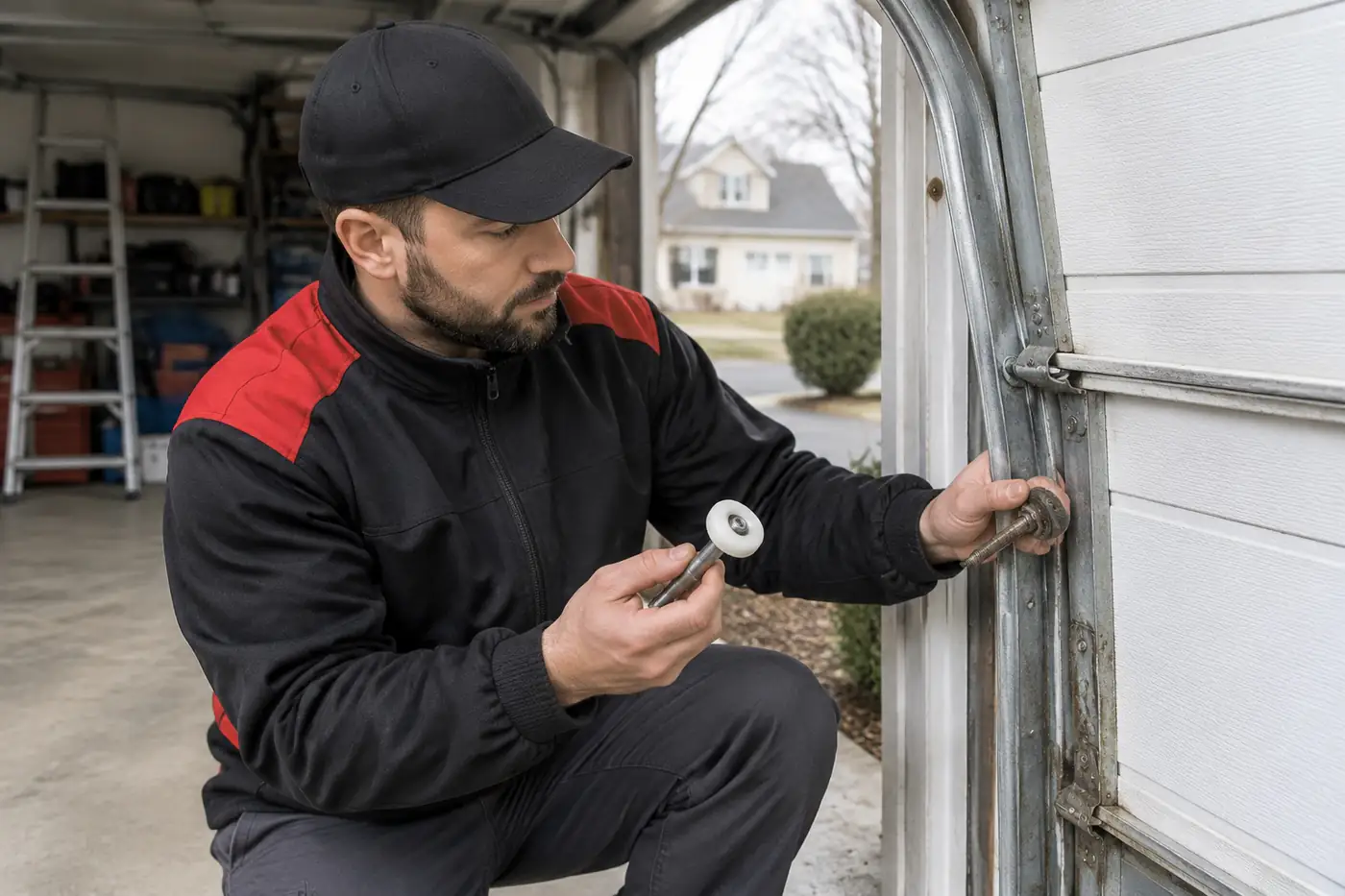
Grinding that lubricant won't stop usually means worn rollers or a bent track. Nylon rollers with sealed bearings make far less noise than old steel ones.
A single loud bang followed by a door that won't lift is the classic sign of a broken spring. Leave springs and cables to a technician.
If the racket comes from the motor and not the door, an older chain-drive opener may be the cause. Belt drives are the low-noise option.


Why is my garage door so loud when it opens?
Start by figuring out where the sound comes from. With the door closed, pull the red emergency release cord and lift the door by hand. If it's still loud, the problem is in the door: rollers, hinges, tracks or springs. If it glides by hand but roars on the opener, the motor, chain or belt is the source. Only do this if the door lifts easily. If it feels like dead weight, stop, because that points to a spring problem. Our manual release guide explains how to reconnect the opener afterward.
New Jersey weather makes all of this worse. Grease stiffens in January, metal parts expand and shrink between humid summers and freezing nights, and road salt dripping off cars speeds up rust on bottom brackets and rollers. That's why a door that ran smoothly in September can start complaining by midwinter.
Garage door noise decoded, sound by sound
Door makers' troubleshooting guides sort noises the same way we do in the field: squeaks are friction, grinding is something rubbing or out of line, rattles are loose parts, and bangs are something letting go. Use this table as a starting point, then confirm it by watching the door as it moves.
| Sound | Likely cause | What to do |
|---|---|---|
| Squeak or squeal | Dry hinges, roller bearings or springs | Lubricate the moving metal parts lightly |
| Grinding or scraping | Worn rollers, bent or misaligned track, debris, worn opener gear | Clean the track and check the rollers; call if it continues |
| Rattling | Loose hinge or track bolts, or a slack opener chain | Snug the bolts without overtightening |
| Creaking or popping above the door | Dry torsion spring coils or binding bearing plates | Lubricate the spring and bearings; have it checked if it persists |
| One loud bang | Broken torsion or extension spring | Stop using the door and call a technician |
| Motor straining or humming | Door out of balance, failing gear, worn opener | Test the door's balance and have the opener checked |
What causes a grinding noise in a garage door?
Grinding usually means metal on metal. The most common source is worn rollers. Old steel rollers lose their bearings, wobble in the track and scrape on the way up. You can often see it: a roller that tilts, has a flat spot, or has a chewed edge. Lubricant may buy a few weeks, but it can't put metal back on a worn bearing.
Tracks are the next suspect. A track that took a hit from a bumper or a trash can, or brackets that worked loose, will pinch the rollers at one spot. Sight down the track from the side for bends, and notice whether the grinding happens at the same height every time. Gravel, sand or leaves in the track can do the same thing, and a wipe with a damp rag fixes it.
If the grinding comes from the opener head, it's often the drive gear or a dragging chain. On many rail openers the drive gear is plastic so it fails before the motor does, and on an older opener that repair is worth weighing against a new unit. Our garage door roller replacement service swaps worn rollers, and we check the tracks and hardware on the same visit.
Can I spray WD-40 on garage door rollers?
You can clean them with it, but it isn't the lubricant they need. The WD in the name stands for water displacement, and the original can is at its best cutting grime and pushing out moisture. The film it leaves on a roller bearing is thin and doesn't stay put. A door that goes silent after a spray of it is usually squeaking again within weeks, and door manufacturers tell owners to skip it as a lubricant.
Use a silicone spray or a product sold as garage door lubricant on roller bearings, hinges and springs, and white lithium grease on metal-to-metal points like bearing plates. Aim at the bearings inside the roller, not the nylon wheel, and keep lubricant off the tracks, where it collects grit and makes the noise worse. The full routine is in our garage door lubricant and maintenance checklist.
How to make a loud garage door run smoother
Most homeowners can handle the first four of these in an afternoon with a socket wrench, a rag and a can of lubricant:
The last two involve parts that hold the door's weight or the opener's settings. That's where a garage door maintenance visit makes sense: we lubricate, tighten and adjust, replace worn parts only with your approval of a written price, and finish with a balance check and an auto-reverse safety test.
- Tighten hinge, track bracket and opener mounting bolts so they're snug, not cranked down, since overtightening strips the holes in a steel door.
- Lubricate hinge pivots, roller bearings, torsion spring coils and the bearing plates at each end of the spring bar, then run the door a few times and wipe off drips.
- Wipe the tracks clean with a damp cloth instead of greasing them.
- Check the bottom seal, which can thump or drag when it's torn or frozen to the driveway.
- Replace worn steel rollers with nylon rollers that have sealed ball bearings, but leave the bottom rollers to a technician because their brackets hold the lift cables under spring tension.
- Have a sagging opener chain adjusted, which stops it slapping the rail, following the opener manual's settings.
When the noise is the opener, not the door
Chain-drive openers are the loudest type by design: a steel chain rides a metal rail, and older AC motors start and stop abruptly. Belt drives use a steel-reinforced belt and are the usual pick for attached garages with bedrooms or a family room above or beside them. Newer DC motors with soft start and stop also cut noise and vibration, even on chain units.
If your opener is old and loud, compare the repair against a new unit. Our guide to the best garage door opener types compares chain, belt, screw and wall-mount drives, and our opener installation team can swap a noisy unit and set its force and travel limits properly.
When a noisy garage door means stop
Some noises are warnings. A sound like a gunshot usually means a torsion spring snapped. Frayed or loose cables can slap or squeal, and a door that jerks, shudders or slams shut is out of balance. Don't keep running the opener on a door like that, because it strains the motor and the remaining parts, and the door can drop.
We're open every day from 7 AM to 10 PM, and same-day visits are often possible when the schedule allows. You can book a two-hour arrival window online or call (732) 555-0142. The technician inspects first and gives you a written price before any work starts.
Questions people ask
Why is my garage door so loud when it opens?
Most often it's dry or worn rollers, hinges and springs, or loose hardware rattling as the door moves. If the door runs smoothly by hand with the opener disconnected, the noise is coming from the opener instead. Lubrication and tightening fix many cases, while worn rollers and old chain drives usually need replacing.
What causes a grinding noise in a garage door?
Grinding usually comes from worn roller bearings, a bent or misaligned track, debris in the track, or a worn gear in the opener. If it happens at the same spot every time, suspect the track. If cleaning and lubricating don't stop it, have the rollers and opener inspected.
Can I spray WD-40 on garage door rollers?
Use it only as a cleaner. The original WD-40 is a water-displacing product with a thin film that doesn't last as a lubricant, and door manufacturers advise against it. Spray silicone or a garage door lubricant on the roller bearings instead, and keep it off the track.
Are nylon garage door rollers worth it?
For most residential doors, yes. Nylon rollers with sealed ball bearings make much less noise than plain steel rollers and don't rust. Very heavy doors, like some solid wood doors, may still call for steel rollers, so ask about your door's weight.
Is a noisy garage door dangerous?
Sometimes it is. Squeaks are usually just friction, but a bang, slapping cables, or a door that jerks or slams can mean a broken spring or failing cable. Stop using the door in those cases and have it checked.
Rather have it handled?
Our technicians handle rollers and hinges across Jackson, Ocean County and Monmouth County, with a written price before any work starts.
Sources
- clopaydoor.com/residential/buyingguide/how-to-fix-a-noisy-garage-door
- clopaydoor.com/residential/buyingguide/how-to-properly-lubricate-garage-door-components
- clopaydoor.com/blog/post/blog/2022/08/03/why-you-should-never-use-wd-40-on-a-garage-door
- wd40.com/history/
- store.geniecompany.com/blogs/genie-blog/garage-door-openers-a-buyer-s-guide-to-the-types-of-genie-garage-door-openers
- clopaydoor.com/residential/buyingguide/garage-door-openers
- support.chamberlaingroup.com/s/article/How-to-Manually-Open-or-Close-a-Garage-Door